



Mallorca Road Trip: 7 Stops and One Hidden Gem
A Mallorca road trip is where the island stops being a beach resort and starts being genuinely one of the best drives in the Mediterranean. Most guides send you north to the mountains first and let the south feel like an afterthought.
I’d flip it. Start in the quiet salt flats of the south, build through the wild east coast, and let the Tramuntana mountain road save itself for last, exactly where a finale belongs.

START/END
Palma de Mallorca
DISTANCE
Around 240 km (150 miles) for the full loop
DURATION
7 to 8 days, enough time to actually stop rather than just drive past everything
ROAD CONDITIONS
Coastal and inland roads are generally well maintained and toll-free; Mallorca has no motorway tolls anywhere on the island. The mountain roads around Sa Calobra and Formentor narrow into genuine hairpins; take them slowly and expect to share the tarmac with cyclists and coach traffic.
THE BEST TIME TO GO
May, June, and September give the best mix of light traffic and warm weather. July and August are genuinely beautiful but genuinely busy, particularly on the Sa Calobra and Formentor roads, where midday traffic can turn a scenic drive into a slow crawl.
BOOKING THE CAR
I always book through DiscoverCars, where car providers are rated 5 to 10 stars purely on completed-rental reviews by actual customers (not like Google Maps). I filter above 8 stars to shortlist the most trusted operators and book from there.
I also add full coverage at booking on DiscoverCars, around €10 a day, well worth it before the mountain roads start (counter full coverage usually runs at €30 to €50 and it typically doesn’t include everything).
I’ve written up my full Mallorca supplier picks separately, and the general licence and deposit rules across the country are covered in my Spain driving guide, which applies here without changes.

Rough driving times
| Leg | Distance | Time |
|---|---|---|
| Palma → Salines des Trenc | 45 km | 45 min |
| Salines des Trenc → Cala Mondragó | 25 km | 30 min |
| Cala Mondragó → Artà | 40 km | 45 min |
| Artà → Alcúdia | 35 km | 40 min |
| Alcúdia → Cap de Formentor | 30 km | 40 min |
| Formentor → Sa Calobra | 75 km | 1.5 hrs |
| Sa Calobra → Deià | 30 km | 45 min |
| Deià → Valldemossa | 10 km | 15 min |
| Valldemossa → Palma | 20 km | 25 min |
These assume no stops and dry conditions; add real time for photo pauses, tour buses on the Sa Calobra descent, and the inevitable slow queue behind a cyclist on the Tramuntana climbs.

Salines des Trenc and Platja des Trenc
Near the town of Campos in the south, salt flats that most visitors drive straight past on the way to the beach, a genuine mistake. The water in the pans turns pink, especially in late afternoon light, the same natural phenomenon found in a handful of spots around the Mediterranean.
Flamingos stop here during spring and autumn migration, never guaranteed but genuinely special when they show up. A perimeter road runs alongside the flats with parking areas to walk out toward the pans.
Five minutes away, Platja des Trenc is one of the island’s best beaches, with long white sand and the turquoise water Mallorca does so well, with protected status keeping development away entirely.

Cala Mondragó
East along the coast, Cala Mondragó sits inside a protected natural park, with two small sandy coves linked by a short walk, clear water, and pine trees running almost to the shore. No hotels, no jet skis, no beach bars competing for attention.
It’s popular in peak summer, as everywhere genuinely good on this island is, but the protected status keeps it from ever becoming more than what it already is. The access road is narrow, and the car park fills early in July and August; morning arrivals get the calmest version of it.

Hidden Gem: Artà and the Llevant Peninsula
Moving north up the east coast, Artà is a hilltop town most visitors to Mallorca simply never reach, and that’s exactly the appeal. The drive in winds through agricultural interior with the Llevant hills ahead, quieter with every kilometre.
A fortress and the Sanctuary of Sant Salvador dominate the skyline above town, with views over the countryside that rank among the best on the island. Tuesday’s market and the unhurried pace are a genuine contrast to an island this heavily visited.
If time allows, the Llevant Peninsula natural park just beyond stretches down to a completely wild, undeveloped coastline, worth the extra kilometres for anyone chasing quiet over convenience.

Alcúdia and Alcúdia Bay
Continuing north, Alcúdia gives you two stops in one. The old town is medieval and walled, largely intact, walking through the gates feels like stepping back several centuries, and it draws thinner crowds than Valldemossa or Deià for exactly that reason.
Five minutes away, Alcúdia Bay is one of the island’s longest beaches, wide, sandy, and shallow for a long way out. Popular, but long enough to absorb the numbers better than most.

Cap de Formentor
At the very northern tip, the drive people remember longest after everything else about Mallorca has faded. The road out to Cap de Formentor is narrow and cliff-hugging, hairpin after hairpin with the sea dropping away on both sides and the light shifting constantly through the day.
A lighthouse marks the very end of the peninsula. Between mid-May and mid-October, the road down to it closes to private cars between 10am and 10pm, camera-monitored, so a sunrise visit works but you’ll need to be back in town before 10am. After that window in summer, it’s park-and-walk or the organised bus, and parking isn’t cheap.

Sa Calobra
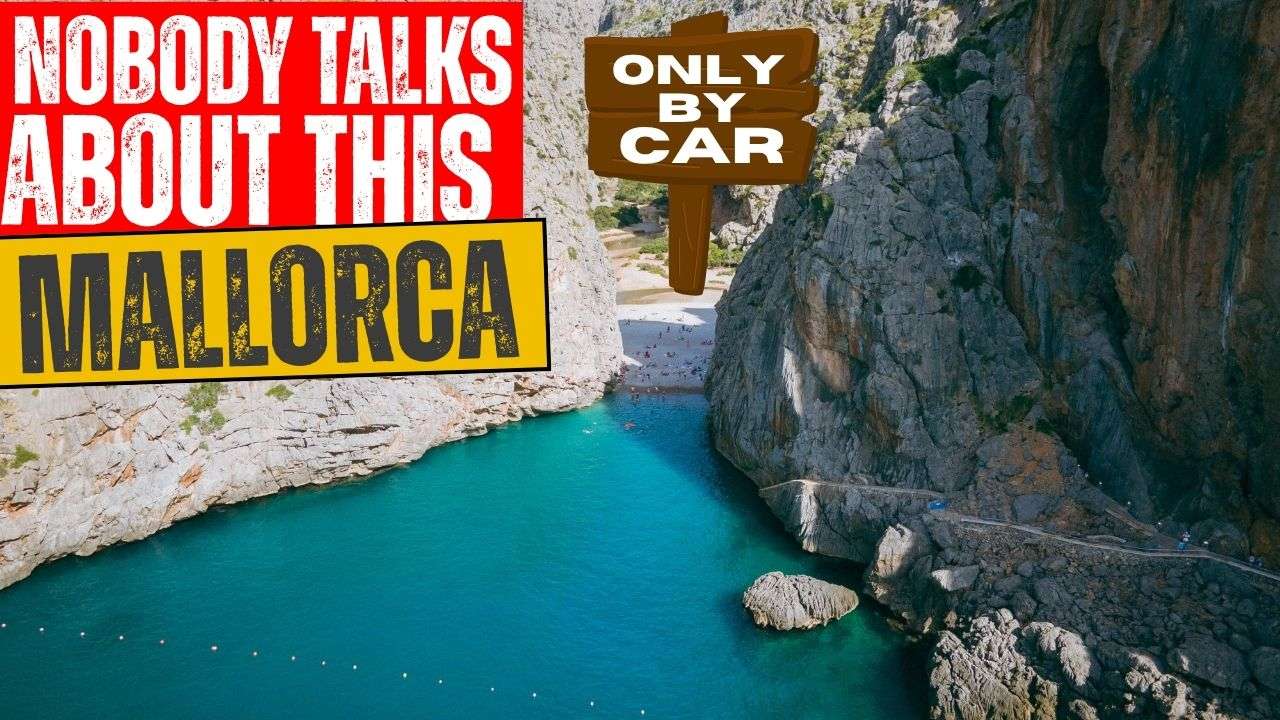
South and inland briefly before this one, and it’s really about the road as much as the destination. Officially the Ma-2141, built in 1932 by engineer Antonio Parietti, the route to Sa Calobra drops through 26 hairpin bends, including the Nus de sa Corbata, a 270-degree loop where the road passes beneath itself.
Bus traffic concentrates heavily between 10am and 3pm, when tour groups run the Sóller train, tram, and boat combination in reverse through here; an early morning or a late afternoon run avoids most of it. Full attention is required either way; this isn’t a road to attempt while you’re still finding your feel for the car.
At the bottom, the Torrent de Pareis gorge opens onto a small rocky beach, walls rising straight up on both sides. Walk further into the gorge if you can; it gets quieter the deeper you go, and then take the same road back up slowly; you’ve earned it.

Deià
A short stretch of mountain road further south, and Deià is what happens when an artists’ village never quite sells out. Genuinely tiny, perched above a small rocky cove, home for decades to Robert Graves and the creative community that formed around him.
Parking takes patience; the village itself doesn’t rush: walk, look, have lunch. Cala Deià, the cove below, is a short drive down and worth it for a swim if the timing lines up.

Stop 7: Valldemossa
The finale, and the village most people use as their entry point into the Serra de Tramuntana, a UNESCO World Heritage mountain range running the length of the west coast. Stone houses, flower-covered facades, narrow streets climbing steeply through the old quarter.
Chopin and George Sand spent a winter here in the 1830s, and the monastery where they stayed is now a museum worth the visit. Go early, before the coach tours arrive, and let the pace slow down to match the village’s own.

A Few Practical Notes
Sa Calobra rewards a very early or very late visit; midday bus traffic between 10 and 3 turns the hairpins into a queue. Formentor’s lighthouse road closes to cars from 10am in peak season; plan a sunrise visit if the lighthouse itself matters to you.
If a credit card isn’t an option for the security deposit, most Mallorca suppliers still require one in the lead driver’s name; my guide to renting without one covers which operators make exceptions. For the fuller picture on what full coverage actually protects against, my car rental insurance guide breaks it down, and a few genuine ways to save on the booking itself are worth a read before you confirm anything.
Fuel policy across the island’s suppliers is almost always full-to-full: return the tank as received or pay an inflated refuelling charge at drop-off. Stations thin out a little in the more remote parts of the Tramuntana, so don’t let the tank run low before tackling Sa Calobra or the Deià to Valldemossa stretch.
Give the full loop seven days if you can manage it; this island rewards the slow route far more than a tight checklist ever could.


Leave a Reply