


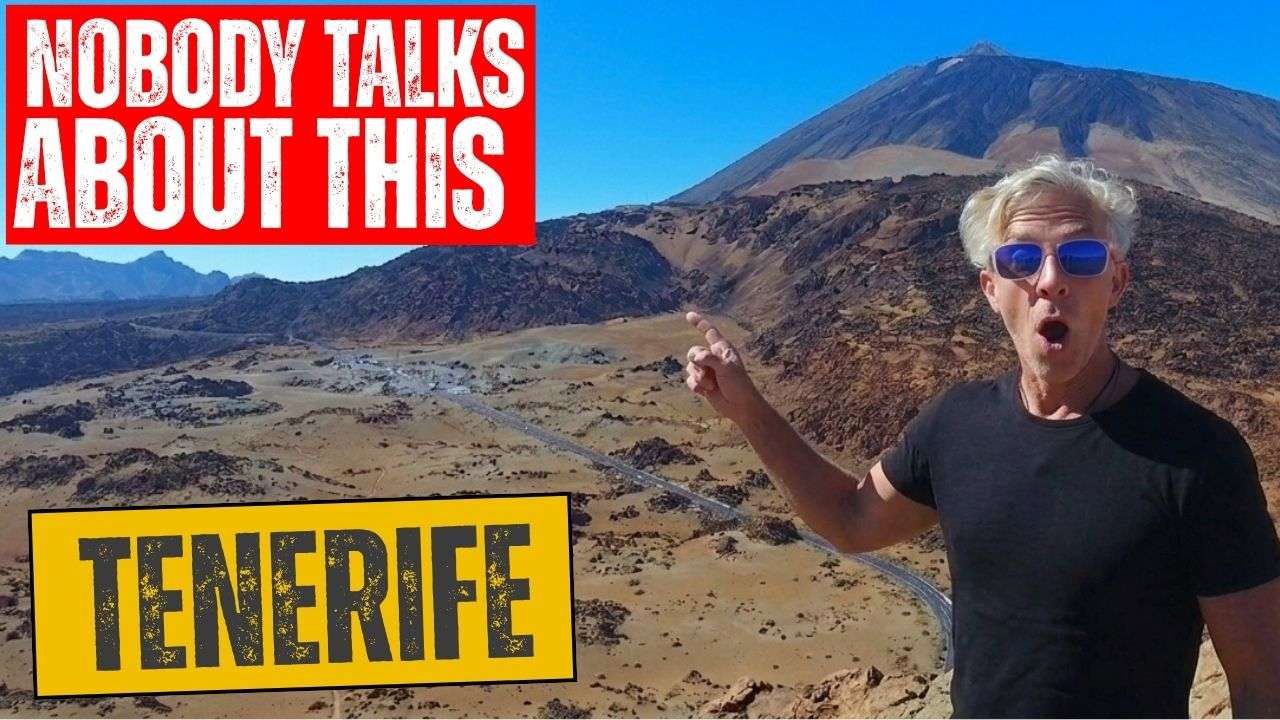

Tenerife Road Trip: 14 Stops and One Hidden Gem
Most people who fly into Tenerife see about ten per cent of the island. They land, settle into a resort in the south, and never leave the strip between the pool and the beach.
Which is fine; the resorts are genuinely good, but the moment you rent a car, the island opens up completely: volcanic craters, natural pools cut into black lava rock, an ancient forest that predates the Ice Age, and towns the package crowd never finds.
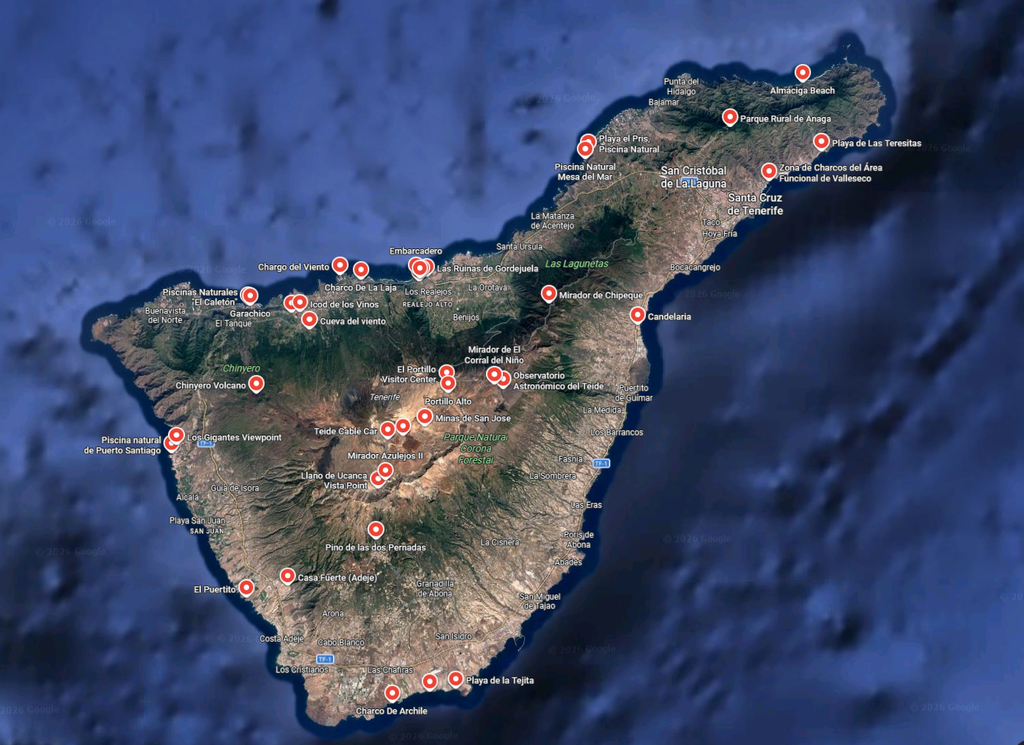
This Tenerife road trip starts and ends in Los Cristianos, works backwards through the coast and interior toward the island’s volcanic heart, and finishes at the one place every visitor has heard of, saving it for exactly the moment it deserves.
START/END
Los Cristianos, Tenerife
DISTANCE
Around 350 km (215 miles) for the full loop, more if you take every detour to a natural pool along the way
DURATION
7 to 8 days, less if you’re only chasing the highlights, more if the pools pull you in the way they pulled me in
ROAD CONDITIONS
Motorways run the length of both coasts and are toll-free, a rarity in a Spanish island destination. The interior roads, especially around Masca and Anaga, narrow into genuine switchbacks with sheer drops; slow down and use the horn on blind bends the way locals do. Drive on the right, same as mainland Spain.
THE BEST TIME TO GO
Year-round is the honest answer; Tenerife’s nickname is the Island of Eternal Spring, but April to June and September to November avoid both the winter Atlantic swell that closes some natural pools and the August crowds at Alberobello-level attractions like Teide’s cable car.
BOOKING THE CAR
I book through DiscoverCars, which rates Tenerife’s local and international suppliers from 5 to 10 stars using only reviews from completed rentals. I filter above 8 to shortlist the most trusted providers before I even check price, and cancellation is free up to 48 hours out, so there’s no downside to booking the moment flights are confirmed.
For supplier names by airport, north or south, I’ve ranked my top picks separately, and I always add full coverage at booking for around 8–10 euros a day, well under what the counter charges (30-50 euros/day) for the same zero-excess cover.
The general rules for driving across the archipelago, ferry crossings between islands, fuel, and licence requirements, I’ve covered in a separate Canary Islands guide; most of it applies here exactly as written.
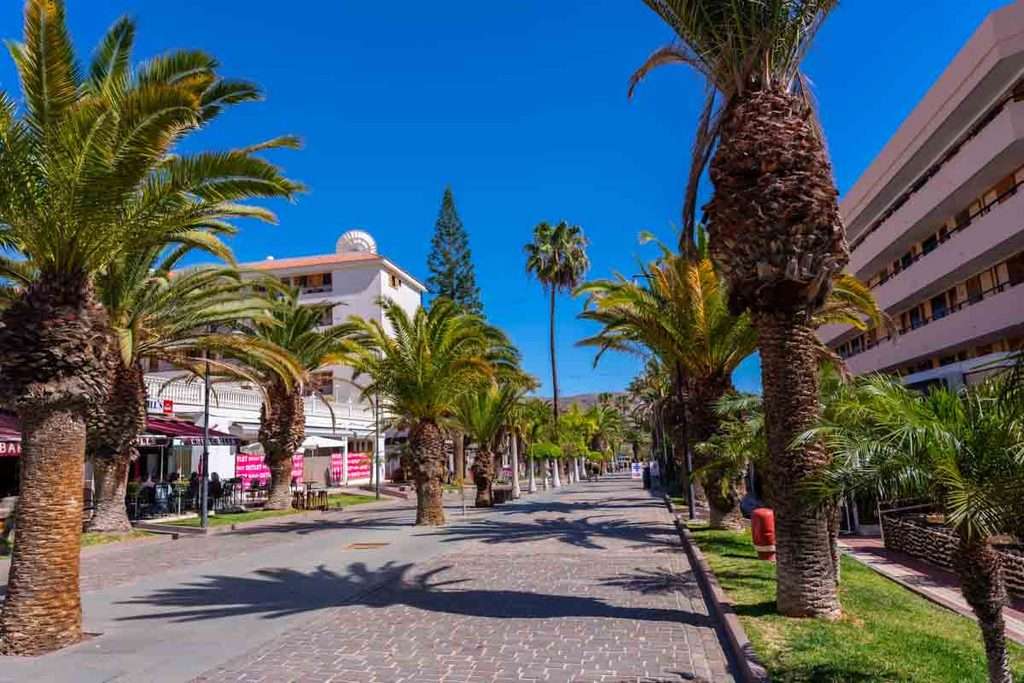
Los Cristianos — Where the Loop Starts and Ends
Base yourself here for pickup and drop-off, but don’t rush straight out; three worthwhile stops sit within twenty minutes, and the resort belt almost never reaches them.
Playa de la Tejita is a wild, undeveloped dark-sand beach backed by Montaña Roja, a red volcanic cone that turns extraordinary colours in late afternoon light, no sunbeds, no beach bars.
El Puertito is a tiny fishing cove reached by rocky paths rather than a proper road, where local sea turtles gather in the shallows.
And in the old town of Adeje, ten minutes inland, Casa Fuerte is the oldest standing building on the island, a 16th-century fortified residence turned prison, then tomato-packing factory, now slowly being restored by the same family that has owned it for centuries, free to visit, with tours given by family members themselves.
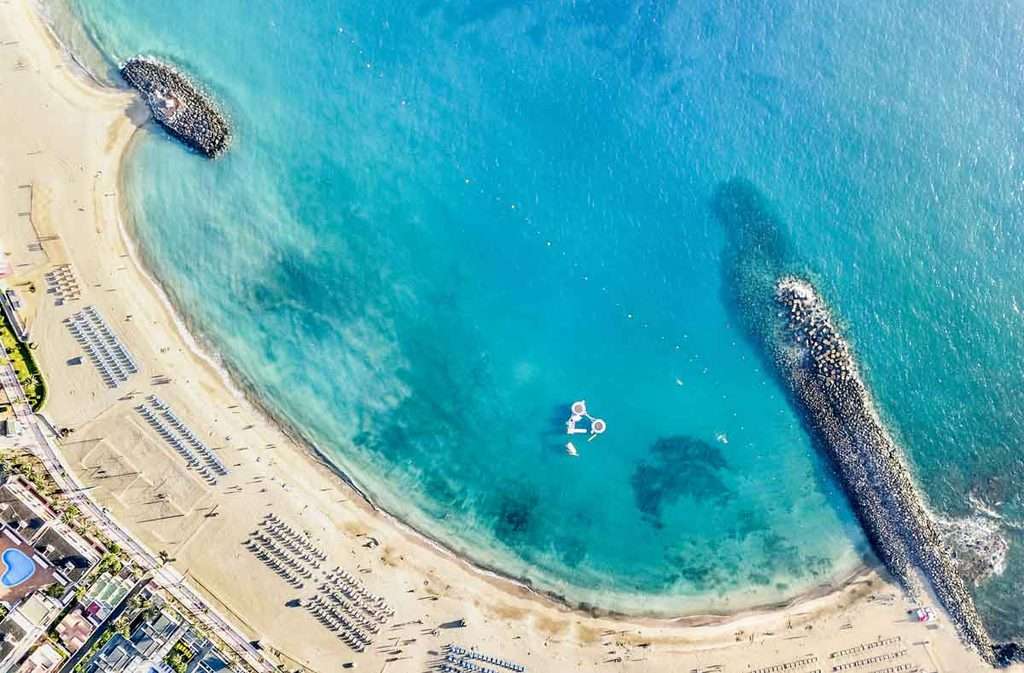
Charco de Archile
South of Amarilla Golf on the southeast coast, a natural sheltered cove that locals in this part of the island have quietly kept to themselves. Calm water, easy access, no facilities and no sunbeds, just volcanic rock and the occasional family who drove here because they already knew about it.
Most visitors arriving through Tenerife South Airport head straight for the resort belt and never turn the other way. This is the reward for doing exactly that.
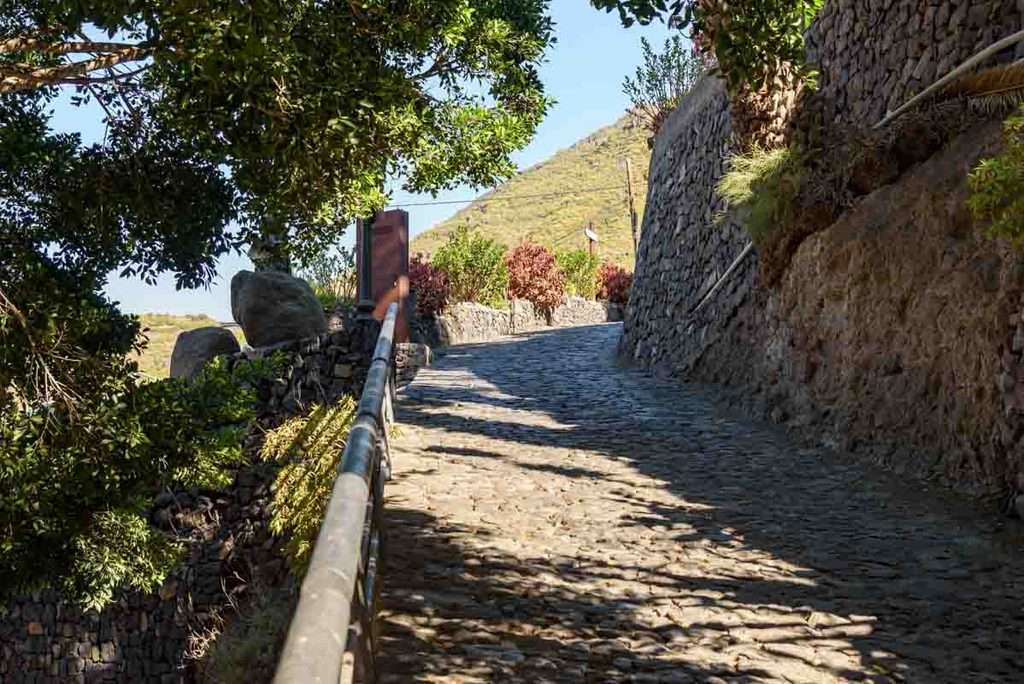
Masca
Roughly an hour and a half northwest, the most dramatically positioned village on the island. Masca clings to a narrow ridge in the Teno massif, surrounded by ravines on both sides, reached by a genuine switchback road that tests the driver as much as the car.
Renting and driving a car in Spain is usually a straightforward process, and honestly, although challenging at the start, these switchbacks will become just part of the experience, something unmissable.
The village itself is tiny, a handful of stone houses above a deep gorge, with the kind of silence that only exists in genuinely remote places.
The gorge descends all the way to a small black-sand beach at the sea; the hike down now requires a permit and a boat return, so check the current system before setting off. Even without the walk, the drive and the village alone justify the detour.
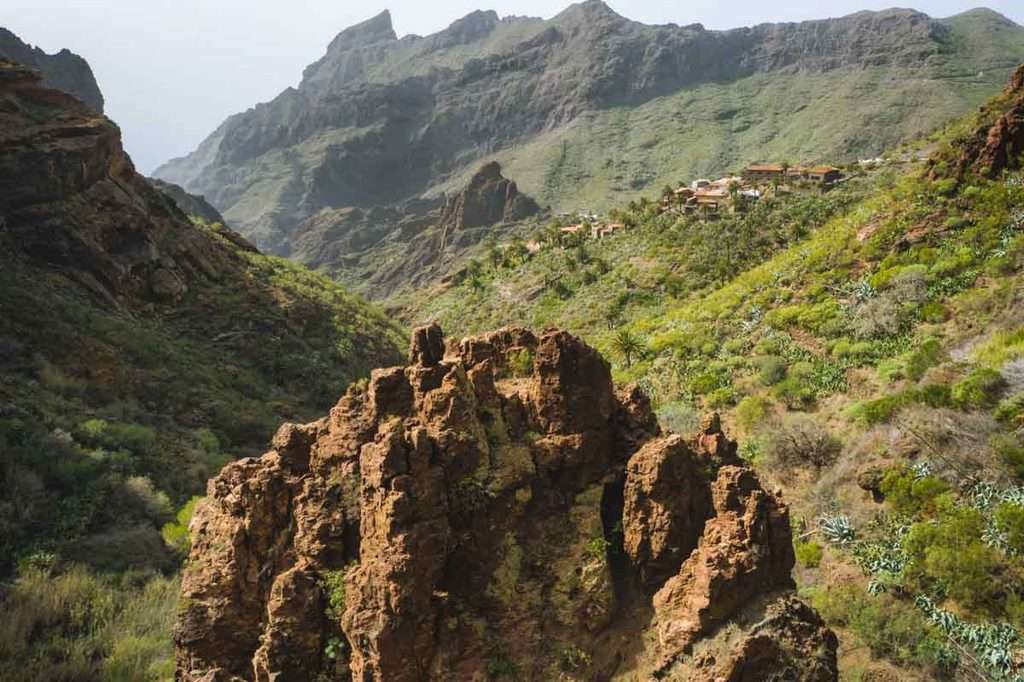
Anaga Rural Park and Taganana
At the extreme northeast tip of the island, the landscape changes entirely. Anaga is a UNESCO Biosphere Reserve, one of the last surviving fragments of the ancient laurisilva forest that once covered much of southern Europe before the climate shifted millions of years ago. Dense, permanently misty, and unlike anywhere else in the Canaries.
The narrow roads wind down through the forest to Taganana, a village at the bottom of a vertiginous descent, facing a coast of dramatic cliffs and dark sand.
The restaurant in the village serves traditional Canarian food, papas arrugadas, grilled fish, mojo in both colours, at prices that don’t exist in the tourist south. Have lunch here.
Playa de Las Teresitas
Just north of Santa Cruz, a beach that looks entirely out of place on a volcanic island. Teresitas was created in the 1970s with golden sand shipped in from the Western Sahara, sheltered by a breakwater and lined with palm trees, a deliberate contrast to the black volcanic beaches everywhere else on Tenerife.
This is where Santa Cruz families spend their weekends: no rows of branded sunbeds, no entertainment programme, just a long, calm beach with the Anaga mountains behind it.
Candelaria
South along the coast, the most spiritually significant town in the Canary Islands. Candelaria is built around the basilica dedicated to the patron saint of the entire archipelago; local tradition holds that the image of the Virgin appeared here on the beach before the Spanish conquest and was already venerated by the Guanche people, the island’s original inhabitants.
The basilica sits directly on the seafront, and the promenade outside is lined with nine bronze statues of the menceys, the Guanche kings who ruled Tenerife’s territories before colonisation, each facing the sea. A rare and genuinely moving public acknowledgement of the people who were here first.
San Cristóbal de La Laguna
Tenerife’s former capital, and one of the most undervisited cities in the whole archipelago. La Laguna was the first planned colonial city in the Spanish Empire, laid out on a strict grid at the end of the 15th century and later used as the template for major cities Spain built across the Americas, Havana, Lima, Mexico City among them. The old town is a UNESCO World Heritage Site, and it shows in every restored facade.
Colourful arcaded streets, convents, churches, and a working university give it a lived-in atmosphere completely unlike the resort belt further south. Budget at least half a day.
Mesa del Mar
In the municipality of Tacoronte, a pair of natural pools that locals have visited for generations and that most international visitors bypass entirely. One pool is deeper and better for swimming, the other calmer and shallower.
The real reason to detour here is sunset: sitting in the water as the sun drops behind Teide to the west, the mountain reflected across the calm surface. Locals call it “papá Teide,” which says something about how this island relates to its volcano.
Charco del Viento
Continuing along the north coast in La Guancha, one of the most beautiful natural pools on the island and one almost no international visitor finds. Lava arms extend into the sea here, forming a naturally sheltered basin with water clear enough for genuinely good snorkelling.
Banana plantations run right down to the coast behind it; the intense green against black lava rock and blue water is about as Canarian an image as exists. On weekdays it belongs almost entirely to local families.
Rambla de Castro
West of Puerto de la Cruz in Los Realejos, a protected coastal landscape that the tourist resorts never seem to find. A walking trail descends through ancient banana plantations and one of the island’s finest groves of wild dragon trees, down through a ravine to a wild, completely undeveloped black-sand beach.
The walk itself is the point: ancient trees, the sound of water in the ravine, and a dramatic coastal arrival at the bottom. Give it two hours and wear proper shoes; the path is uneven.
Charco de La Laja
Between Icod and Puerto de la Cruz in San Juan de la Rambla, the pool that Spanish media named the most beautiful in the country. A stone staircase descends from the coast road, and the first sight of turquoise water against black volcanic rock, with the Atlantic beyond it, explains the reputation immediately.
One honest note: check sea conditions before going down, especially with any swell running. Calm days here are extraordinary; rough days genuinely aren’t safe, which is exactly why a lifeguard service operates through summer.
Icod de Los Vinos
A short run east brings you to Icod, home to the Drago Milenario, a dragon tree estimated at 800 to 1,000 years old and the largest known specimen in the world, a species found only in the Macaronesian region. Its resin was once traded as dragon’s blood, used as dye, medicine, and varnish; standing beneath the canopy feels close to prehistoric.
The second reason to stop is the Cueva del Viento, a lava tube stretching 17 kilometres underground, among the five longest in the world, with guided sections open to walk through, an alien landscape of smooth volcanic rock unlike anything else on the island.
Garachico
North along the coast, one of the most characterful towns on Tenerife. Garachico was almost entirely destroyed by a 1706 volcanic eruption that buried its harbour under lava; the rebuild took centuries, and the same eruption left behind something unexpected: natural rock pools carved into the volcanic shoreline, collectively known as El Caletón, free to enter and genuinely beautiful.
The old town above is worth a slow walk: the church of Santa Ana, the old fortress, and elegant squares in one of the northwest coast’s least touristy towns, despite being fully worth the visit.
Los Gigantes and Puerto de Santiago
Descending toward the west coast, cliffs rise 400 to 600 metres straight from the Atlantic. The best vantage point is actually Puerto de Santiago, just south, where the full scale of the cliff face is visible from above.
Boat trips run along the base of the cliffs, and this stretch of water is one of the most reliable in Europe for whale and dolphin watching.
Just south of the viewpoint, follow the signs toward the coast to find Piscina Natural de Puerto Santiago, one of the best natural rock pools on the west coast, sheltered, clear, and used mostly by local families.
Check sea conditions before swimming, as with every volcanic pool on this list.
Teide National Park
The finale, and one of the great scenic drives anywhere in Europe, no cable car or hiking permit required. Climbing from the coast, the temperature drops, the vegetation shifts from subtropical to mountain pine, and within half an hour you’re in a landscape that has nothing to do with the resort island below.
The road up into the Cañadas takes you across the floor of an ancient volcanic caldera, a vast plain of solidified lava with Teide, Spain’s highest peak, rising on one side and the crater walls on the other. Stop at every mirador (viewpoint): Mirador de la Ruleta, Mirador del Tabonal Negro, Mirador de Llano de Ucanca; each gives an entirely different angle on the same landscape, its reds, blacks, and ochres shifting with the light through the day.
Walking the flat caldera floor costs nothing and gives a genuine sense of remoteness that’s rare anywhere in Europe. Arrive early; the light is extraordinary, and most visitors don’t show up until late morning.
Hidden Gem: Chinyero Volcano
Everyone knows Teide, and it earns the reputation. But the cable car books out fast and the main viewpoints fill quickly in peak season. Near Santiago del Teide, Chinyero offers a strikingly similar experience with almost none of the crowds.
Chinyero was the site of Tenerife’s last eruption, in 1909, when lava flowed for eleven days across the island’s northwest. A circular trail of about six kilometres now loops through the resulting lava fields, black basalt underfoot, Teide visible above, pine trees slowly re-establishing themselves at the field’s edges, and almost no one else around. Easy walking, around two hours at a relaxed pace, and one of the best contrasts on the whole loop.
A Few Practical Notes Before You Go
Natural pools vary enormously with sea conditions; always check before swimming rather than assuming a calm photo online means a calm day in person. The north coast is effectively a different island from the resort south; give it at least two full days rather than a single detour.
If Tenerife is one leg of a wider Canaries trip, Gran Canaria rewards the same approach; I’ve written up a full loop by car there too, along with my supplier picks for that island specifically.
Give the full loop seven to eight days if you can manage it. Tenerife rewards the slow route far more than it rewards a tight checklist.


Leave a Reply