



Renting a Car in TURKEY – 10 Must-Know Facts!
Renting a car in Turkey rewards you more than almost anywhere else in the Mediterranean, the Aegean coast, Cappadocia, and ancient sites you can pull over for on a whim. It also comes with a toll system, licence rules, and a few genuinely local quirks that catch most first-time visitors off guard.
Here’s what actually matters before you sign anything, not the generic advice that applies everywhere.
Choosing an Airport and a Supplier
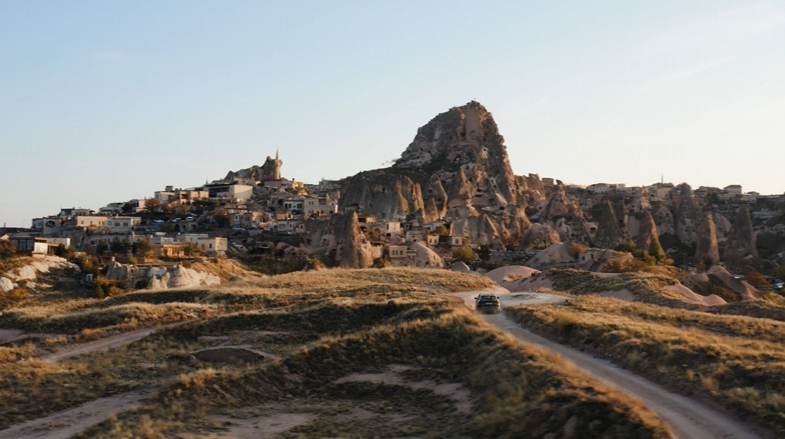
Istanbul, Antalya, and Izmir all run deep, competitive rental markets.
Antalya tends to offer the best overall value; Istanbul usually runs the priciest of the three, though rarely by a dramatic margin. Book ahead for summer and major holidays; automatic and family-size cars sell out fastest across the whole country during school breaks.
Global names like Avis, Enterprise, Europcar, and SIXT give you a standardised English-language process and a well-kept fleet, at a real price premium over local Turkish operators.
Local companies are usually significantly cheaper, and quality here swings more than almost anywhere else I have covered so far; genuinely excellent operators sit alongside a few built specifically around scamming tourists who don’t know better.
So, what do I do?
I ALWAYS check both sides through the comparison website DiscoverCars, where rental companies are rated 5 to 10 stars purely on completed-rental reviews, similarly to Airbnb for properties.
I filter above 8 or even 9 stars to shortlist the most trusted operators, and compare global and local companies side by side on the same dates before booking. I tend to favour a higher rated than a name by itself.
I’ve broken down specific supplier picks for Istanbul, Antalya, and Izmir in their own guides, along with a fuller country-wide overview if you’re still deciding which airport to fly into.
A quick Regional Comparison
| Airport | Typical pricing | Best base for |
|---|---|---|
| Antalya | Most competitive | Turquoise Coast, Mediterranean beaches |
| Izmir | Mid-range | Aegean coast, Ephesus, Pamukkale |
| Istanbul | Highest, rarely by much | City stays, Bosphorus, onward road trips |
Transmission is worth flagging too; most Turkish rentals default to automatic, the reverse of what you’ll find across much of mainland Europe, where manual is standard and automatic costs extra. Request a manual specifically if that’s your preference.
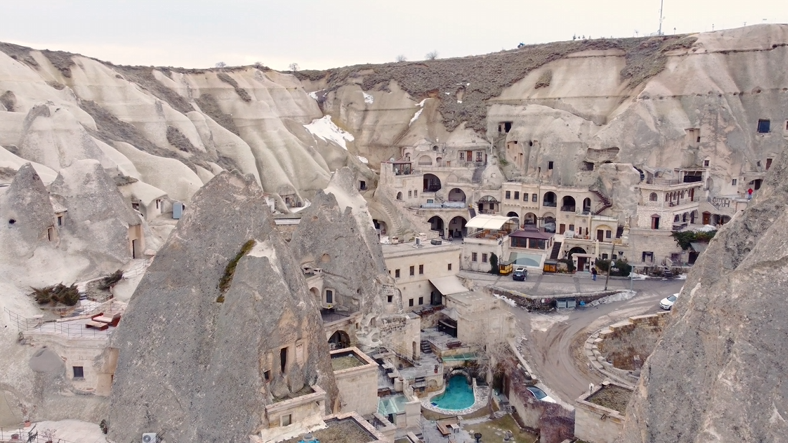
A compact or mid-size car covers the coast and cities fine; a higher-clearance vehicle is worth considering for Cappadocia or rural inland routes, though not essential on the main roads.
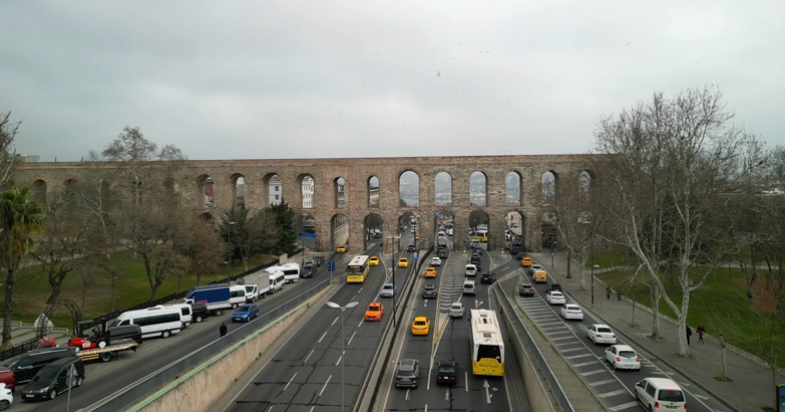
There Are No Toll Booths Anywhere in the Country
This surprises almost everyone. Every motorway, bridge, and tunnel in Turkey runs on HGS, Hızlı Geçiş Sistemi, a fully electronic fast-pass system. There’s no lane to stop and pay at; an overhead reader scans a tag fitted to the windscreen as you drive through at normal speed.
Almost every rental car already carries this tag, pre-linked to a prepaid account through the rental company, and the tolls accumulated during your trip get billed at the end, sometimes with a small admin fee per crossing added on.
Confirm at pickup that the tag is active and working; that’s genuinely the only thing you need to do yourself.
If a car does pass through a gate without a valid account, the rental company has 15 days to settle it online penalty-free, so an isolated gap isn’t automatically your problem.
The real risk is a fine rather than the toll itself, and fines run considerably higher, landing on the rental account and eventually on you, with an admin fee stacked on top, well after you’ve flown home.
The Equipment Law That Goes Further Than Most Guides Mention
Turkey requires two warning triangles in the car, not the single triangle standard across most of Europe, worth checking both are actually present at pickup.
What most guides miss entirely: Turkish law also mandates a fire extinguisher and a first aid kit in every passenger car, and while a reflective vest technically sits outside the strict legal annex, it’s standard practice at roadside checks and worth having regardless.
If winter driving through the interior is part of the plan, routes crossing the Bolu Dağı pass on the TEM motorway and sections of the eastern Anatolian plateau can require snow chains between roughly November and April, worth asking about specifically if Cappadocia or anywhere inland is on a winter itinerary.
Licence, IDP, and What Police Actually Check
Your home licence works in Turkey for up to six months if it’s written in Latin script; otherwise an International Driving Permit is required alongside it. Even with a Latin-script licence, an IDP is still worth getting; both rental desks and police checks frequently ask for one regardless of the technical requirement.
Get the physical paper version specifically; digital versions exist but aren’t reliably accepted. Carry your passport, licence, and IDP together every time you drive; random police checks do happen, more often after dark.
You can organise your IDP either at your local Car Association, as we have here in Victoria (RACV), or probably easier online at the International Driving Permit website.
Driving Rules, Local Quirks, and the Unified Emergency Number
Turkey drives on the right, seatbelts are mandatory in every seat, and hands-free is required for any phone use while driving.
Road signage follows the Vienna Convention on Road Traffic, the same internationally recognised system used across most of Europe, so red triangles, red circles, and blue mandatory signs will already look familiar.
The blood alcohol limit sits at 0.05%, roughly one standard drink per hour, and breathalyser checks are genuinely common at night.
Speed limits generally run 50 km/h in cities, 90 on rural roads, and up to 120, sometimes 130, on motorways, with widely deployed speed cameras and fines that aren’t trivial.
If you’re fined for speed or parking, pay it directly and promptly; letting it pass to the rental company adds a hefty admin fee on top of the original amount.
One number worth saving before you land: since 2023, Turkey consolidated its emergency lines into a single unified number, 112, replacing the separate police, ambulance, and fire lines that used to exist independently. One call covers every kind of emergency now, genuinely simpler than the old system.
Rural Anatolia moves slower than the coast but brings its own hazards: farm vehicles, livestock, and pedestrians on the road edge, particularly as light fades. Ease off once you’re away from the main coastal routes.

Parking and Fuel
Look for İSPARK signage for paid municipal parking in the bigger cities; smaller towns often run informal street parking managed by uniformed attendants expecting a small direct payment.
Illegally parked cars get towed quickly, red and yellow line zones are enforced for real, and hotel parking is generally the least stressful option where it’s available.
Fuel stations are well distributed even in rural areas, mostly attended rather than self-service, and cards are widely accepted though worth carrying some cash for the more remote stretches.
Petrol runs roughly 35 to 45 per cent cheaper than most of Europe, a genuine bright spot in an otherwise detail-heavy list.
A car left overnight on the street rather than a hotel car park or a supervised İSPARK lot is also worth a second thought in the busier city centres, not because break-ins are rampant, but because towing enforcement moves fast enough that a misjudged spot costs real time and money the next morning.

Full Insurance, Predictably, Always
Rural roads can be narrow and occasionally rough, shared with more than just other cars, and parking in the major destinations gets tight. Uncovered, a scratch runs the usual €300–500 at drop-off, no different from anywhere else on this site.
Credit card or travel insurance might help; check the excess first, mine sits at €700, close to useless against exactly this kind of small damage. Counter cover runs €30–50 a day and often skips tyres or rims. Honestly, I find it too expensive, especially considering it may not include everything and you won’t be able to read the full contract when you sign it.
I always add full coverage when I book the car on DiscoverCars for around €10 a day; genuine zero excess and roadside assistance is included, which is a must-have in Turkey. All sorted before I land. No worries at the counter.
The Three Things Genuinely Worth Watching For
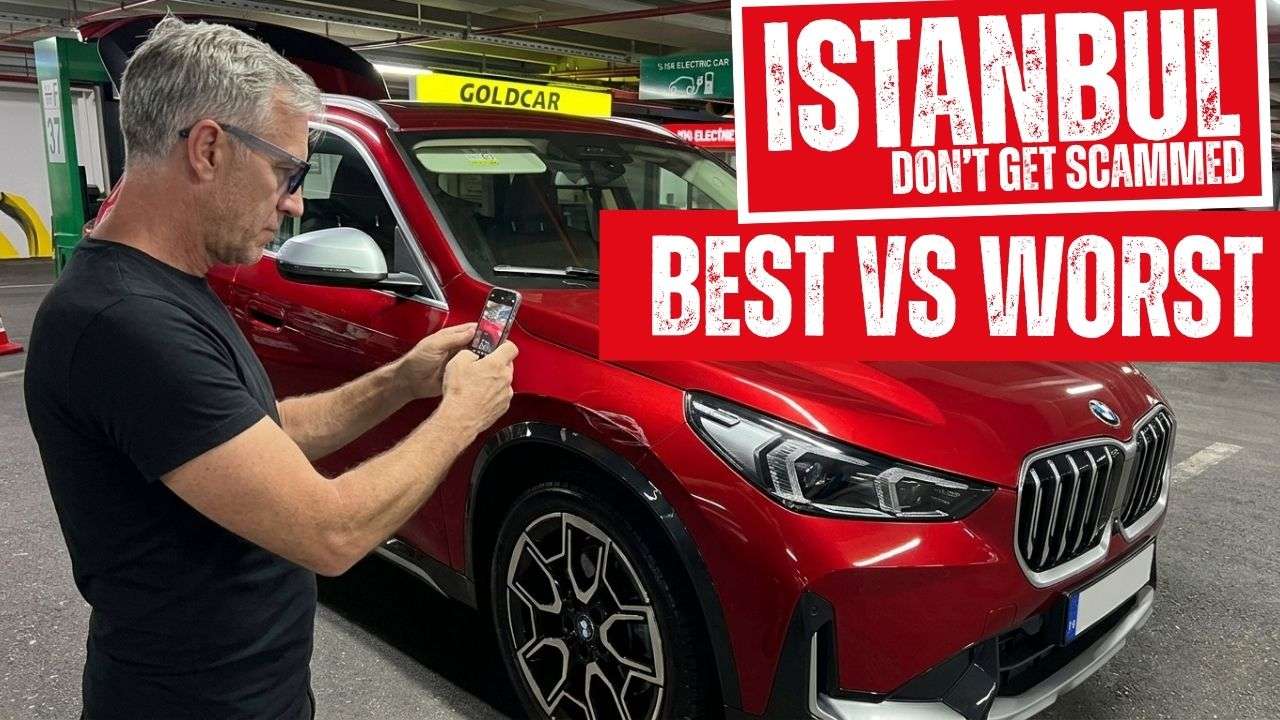
The pre-existing damage trick shows up here as it does everywhere: photograph the car at pickup, every side, roof, undercarriage, and interior, timestamped, and again at drop-off, including the dashboard.
The insurance invalidation trick follows the same pattern too: if a desk claims your pre-booked coverage isn’t valid, it almost certainly is; refer to your confirmation and hold your ground calmly.
The third is specific to Turkey: a noticeably inflated admin charge stacked on top of the actual HGS toll, sometimes only visible on the final statement well after the trip ends.
Ask directly at pickup how tolls are billed and whether a per-crossing admin fee applies; get it in writing if you can. My broader guide to rental scams covers the patterns behind all three in more depth if you want the fuller picture before you travel.
One More Thing Worth Confirming: Crossing Borders
If the trip includes a hop into Bulgaria, Greece, or Georgia, don’t assume the rental agreement automatically permits it.
As in most countries on this site, cross-border travel often needs separate authorisation and sometimes an extra fee, confirmed directly with the operator rather than assumed from the booking page.
To be honest with you, usually the car providers don’t allow crossing the border, even more so to Georgia.
Get the answer in writing before you rely on it, the same principle that applies to the toll and insurance questions above. That single confirmation avoids the single most disruptive surprise a Turkey road trip can produce.




Leave a Reply