

Albania Road Trip: 7 Stops and One Hidden Gem
An Albania road trip is where Europe still genuinely surprises you: ancient ruins, Ottoman hilltop towns, turquoise water, and mountain landscapes that somehow stayed off the map everyone else has already discovered.
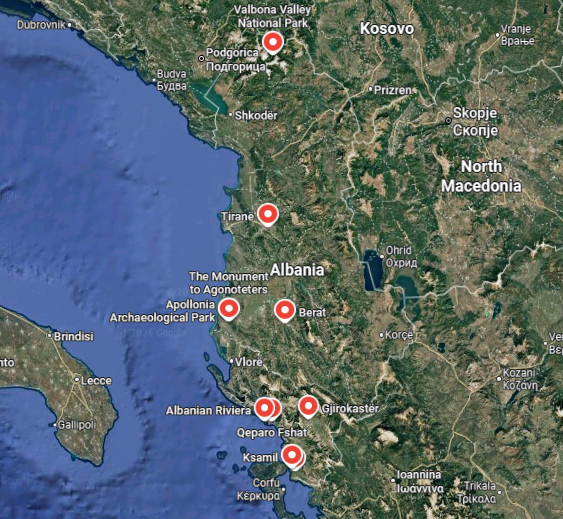
Most itineraries start at Berat and push south to the coast. I’d rather do it the other way, build from the Riviera inland, and let the UNESCO towns close the loop on the way back to Tirana.
START/END
Tirana
DISTANCE
Around 650 km (400 miles) for the full southern loop
DURATION
8 to 10 days for this route alone; add 3 to 4 more if the Valbonë Valley extension in the north appeals
ROAD CONDITIONS
Main highways have improved dramatically over the last decade. The Llogara Tunnel, fully operational since May 2025, cut the old mountain-pass crossing between Vlorë and the Riviera from around 30 minutes to about 7, genuinely changing how this route flows. Off the highways, roads narrow fast through villages and mountain stretches; take them slowly.
THE BEST TIME TO GO
May, June, and September give the best mix of warm weather and manageable crowds, particularly at Ksamil, which gets genuinely packed by mid-morning in July and August. The coastal drive stays open year-round; only the far-north Valbonë extension is weather-dependent.
BOOKING THE CAR
I always book through DiscoverCars, a comparison website where every provider is rated between 5 and 10 stars purely on completed-rental reviews from verified customers (rather than Google Maps, where reviews can be from anyone, doesn’t matter if they used the service).
Albania has excellent local operators genuinely worth choosing over the globals, but a handful of suppliers still build their business around scams; filtering above 8 or even 9 stars is the real protection here.
I’ve written more on the specific patterns worth watching for in my car rental scams guide, and my full Tirana car supplier picks if you want the detail beyond this itinerary.
I always also add full coverage straight on DiscoverCars when booking the car. It costs me just 10 euros/day, and it’s such peace of mind. Honestly, a no-brainer.
For more information, my car rental insurance guide breaks down why that matters more in Albania than in most countries I cover.
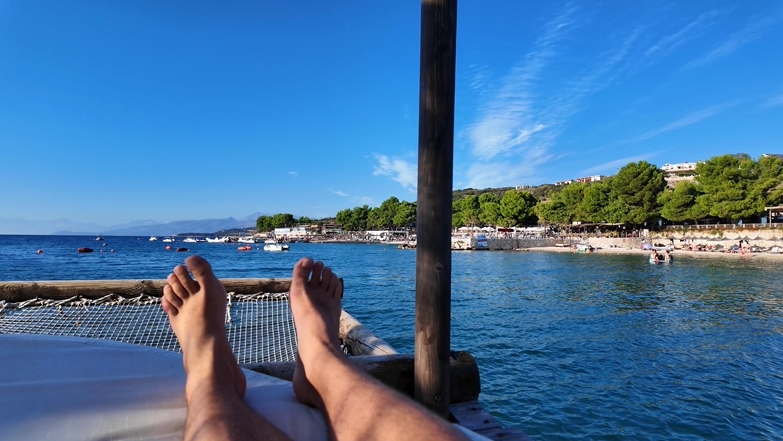
The Albanian Riviera — Himara and Porto Palermo
The coastal road between Sarandë and Vlorë is one of the most spectacular drives in the Mediterranean, mountains dropping straight into the Ionian Sea with turquoise water at every bend.
Himara anchors the stretch, a relaxed bay town with excellent seafood and a castle above it standing in some form since the Byzantine era.
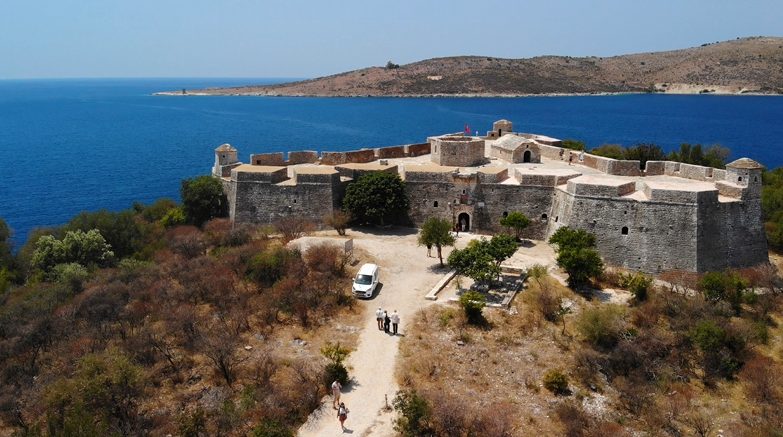
A short drive south, Porto Palermo Castle sits on a peninsula almost entirely surrounded by sea, an 18th-century Ottoman fortress later sealed for decades as a communist-era submarine base.
Today it stands open above what might be the most beautiful bay on the whole Riviera; don’t drive past it.
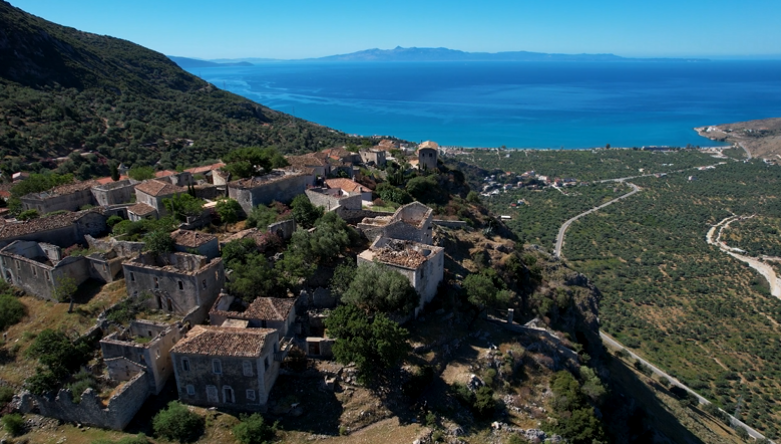
Hidden Gem: Qeparo
Right on the route south from Himara, a tiny village split in two that most Riviera visitors never discover.
The lower half sits by a genuinely beautiful beach; the upper half, the old village, perches on the clifftop above with views stretching over olive groves and the Ionian Sea.
Qeparo is visited mainly by Albanian families rather than tourists, which means honest prices, genuine food, and an atmosphere that feels found rather than followed off someone else’s map.
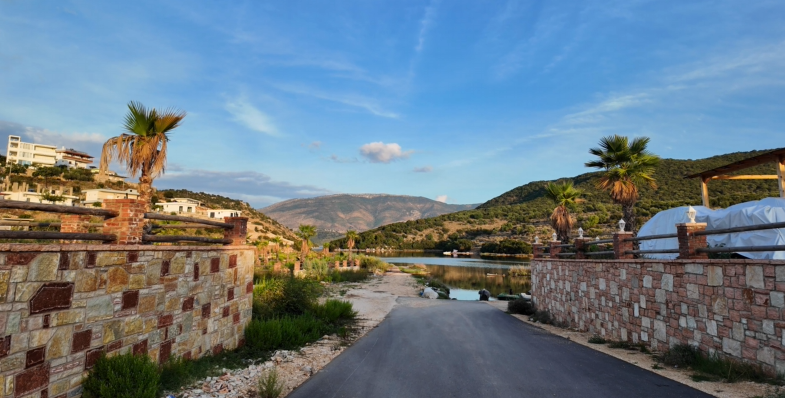
Ksamil
Continuing south, Albania’s most famous beach destination and one of the most beautiful stretches of water in the Ionian. Turquoise sea, small offshore islands, an atmosphere closer to a Greek island than a Balkan beach town.
The Twin Islands are the iconic image here, two small wooded islands reachable by swimming, kayak, or a short boat trip. The Hand of Ksamil, a concrete sculpture rising from the water with steps built into the wrist, is the other.
Go at 7am if you can manage it, still water, low light, and none of the queues that build by 11am in peak summer. If July or August is your window, drive further south to find quieter, more isolated stretches instead.
Butrint
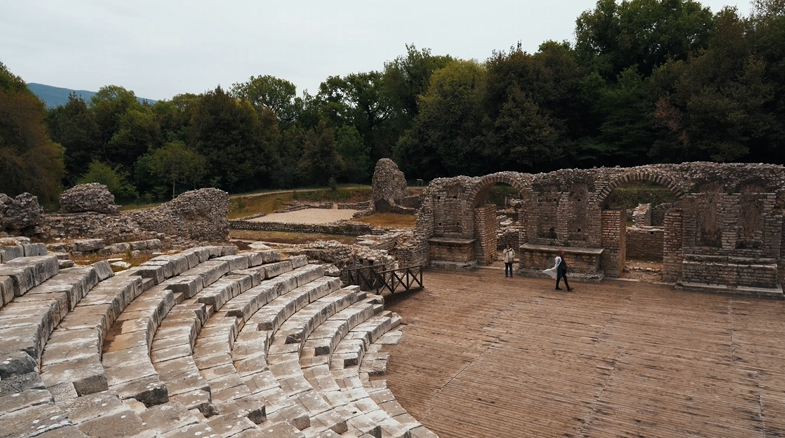
A short drive from Ksamil toward the Greek border, one of the great archaeological sites of the Mediterranean.
Butrint layers over 2,500 years of continuous civilisation, Phoenician, Greek, Roman, Byzantine, Venetian, and Ottoman remains stacked on top of each other in a setting of genuine natural beauty.
Two hours is enough to see it properly; treat it as a focused stop rather than a full day.
Gjirokastër
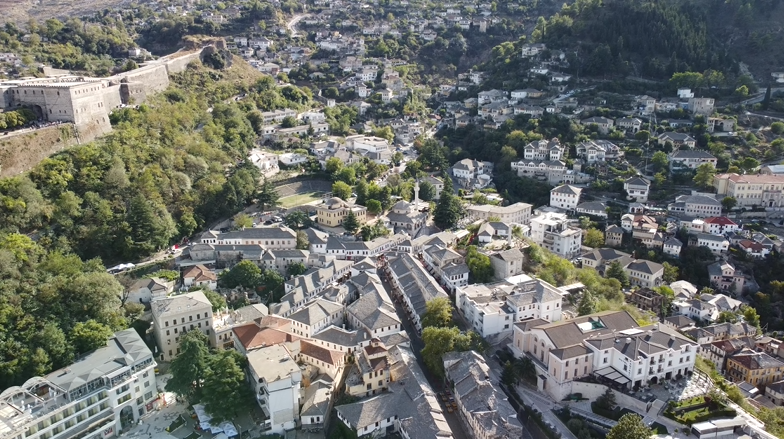
North into the mountains, Albania’s other great UNESCO town, built in pale grey stone rather than Berat’s white, giving it a darker, heavier, more imposing character entirely.
The castle, one of the largest Ottoman fortresses in the Balkans, dominates from above, and the old bazaar below is one of the best preserved anywhere in the country.
This is also the birthplace of Enver Hoxha, the communist dictator who isolated Albania from the outside world for over 40 years; his birthplace still stands in the old town.
Whether or not the history is familiar going in, the atmosphere here feels distinctly different from the rest of the country.
Apollonia and the Monastery of Saint Mary
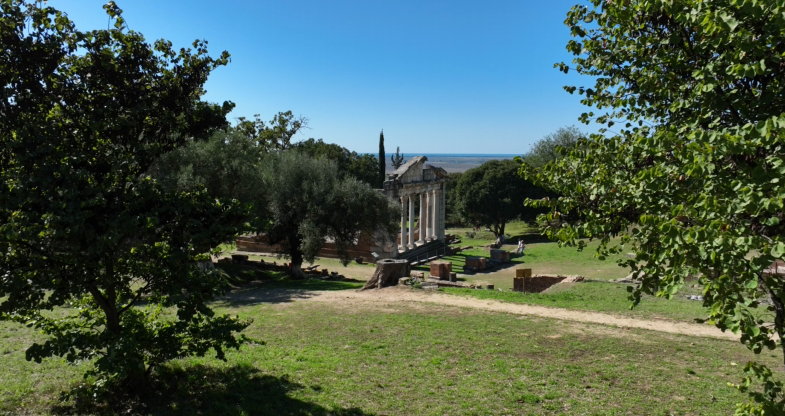
West toward the coast again, one of the most extraordinary and most overlooked archaeological sites in the Mediterranean.
Apollonia was one of the most important Greek colonies in the Adriatic, founded in the 6th century BC and once home to over 60,000 people, and today the ruins sit on a hilltop above an ancient olive grove with almost nobody else around.
The Monastery of Saint Mary sits directly within the same archaeological park, a Byzantine monastery continuously inhabited since the 13th century, worth the short walk from the main ruins.
Berat
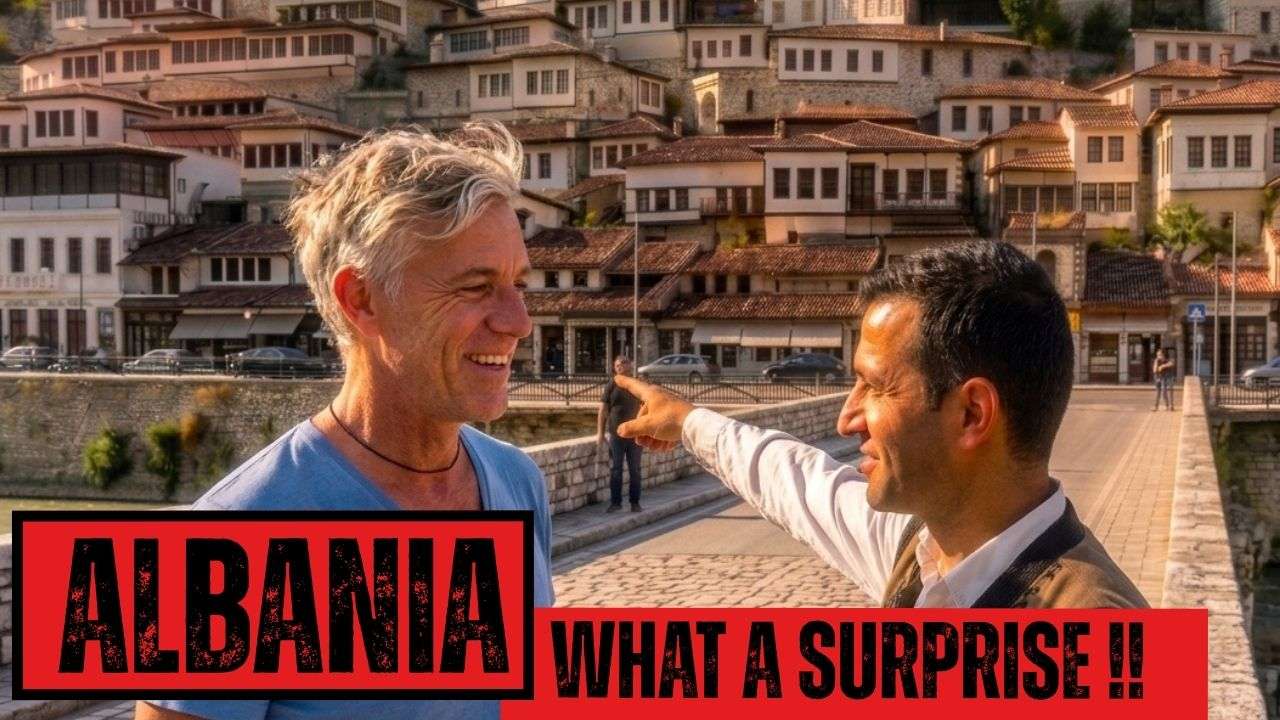
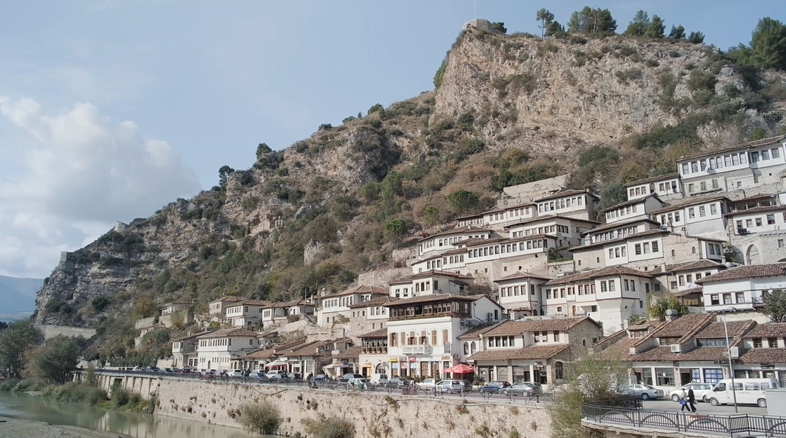
The finale, and one of the most beautiful towns anywhere in the Balkans, the City of a Thousand Windows.
Ottoman-era white houses stack up the hillside above the Osum River in a genuine Tetris of windows, all the way to the castle at the top, still a living neighbourhood of churches and stone houses inside medieval walls.
Walk down into the Mangalem quarter along the river, and try the local Shesh i Zi wine, a full-bodied dry red with berry and cherry notes; Berat is a real wine region in its own right.
Give it a full day if the schedule allows, or better, a night; this is the town that closes the loop back toward Tirana with the strongest possible last impression.
Worth Adding: Valbonë Valley National Park
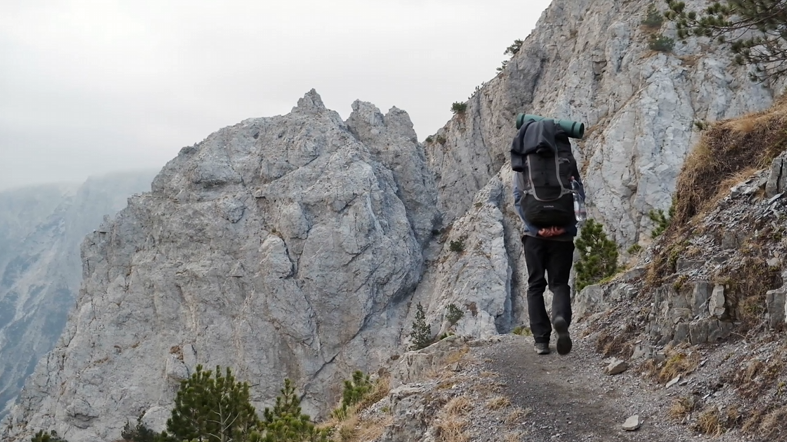
If time allows, treat this as a genuinely separate chapter rather than a stop on the main loop. Valbonë sits in the far north, with towering limestone peaks, glacial valleys, traditional stone guesthouses, and some of the best trekking in the Balkans; the famous Peaks of the Balkans trail connecting Albania, Kosovo, and Montenegro passes directly through here.
Allow three to four days minimum to actually experience the valley rather than just pass through it, either before heading south from Tirana or on the way back north at the very end.
The drive from Shkodër through the mountains to reach it is itself one of the most dramatic roads in the country; a compact SUV or higher-clearance vehicle is worth requesting for this stretch specifically. My guide to the best car size for Europe covers when that upgrade genuinely matters versus when it doesn’t.
A Few Practical Notes
Give Berat and Gjirokastër at least a full day each; both are genuinely extraordinary and neither rewards rushing.
Ksamil at 7am, before the beach fills up, is one of the great experiences of the whole Ionian coast, and Porto Palermo Castle combines Ottoman history with Cold War mystery in a setting that’s easy to drive past without realising what you’d be missing.
If a credit card isn’t an option for the security deposit, most Albanian suppliers still require one in the lead driver’s name; my guide to renting without a credit card covers which operators make exceptions.
Give the southern loop eight to ten days if you can, and treat Valbonë as its own three-to-four-day trip rather than squeezing it in; this is a completely different Albania from the coast and genuinely worth the separate time.





Leave a Reply