




Car Lease vs. Car Rental in Europe – What is Best & Cheaper
Are you planning a road trip through Europe? You might be wondering—should you go with a traditional car rental, or try the little-known alternative of short-term leasing?
This guide breaks down the key differences, hidden charges, and real costs of each option, so you’ll know exactly which one fits your trip.
Short-Term Car Leasing Explained
Before jumping into the full comparison, let’s briefly explain what Short-Term Car Leasing, also called “Temporary Transit” (TT) or a “Buy-Back” lease, really is.
This is a unique European arrangement where you technically lease a brand-new vehicle directly from a manufacturer like Peugeot, Renault, or Citroën. The price includes a guaranteed agreement for the manufacturer to buy the car back at the end of your trip.
It is a streamlined, all-inclusive package designed specifically for non-European Union residents planning a trip of between 28 and 175 days.
While a few providers offer this buy-back for as short as 21 days, I believe it generally becomes a convenient option only with a trip of at least 4-5 weeks.
Leasing a vehicle is a good alternative to renting a car in France, Italy and another bunch of countries. However, it’s not an option in every European state.
Tip: If you are planning to rent for less than 3-4 weeks, a traditional car rental is the best option.

Short-Term Car Lease vs. Car Rental: The Core Comparison
Choosing between leasing and renting is a decision that goes beyond the daily rate. It’s all based on the European trip you are planning to take.
Here is a detailed comparison of the two options:
| Feature | Short-Term Car Lease (TT/Buy-Back) | Traditional Car Rental |
| Duration | Ideal for 4-5 weeks up to 175 days. Mandatory minimum of 21 days. | Best for trips under 3-4 weeks. Only option for under 21 days. |
| Pick-up/Drop-off | Limited network of locations (e.g., only Milan/Rome in Italy). Excellent one-way flexibility (often no extra fee within the same country). | Vast network of convenient locations (airport, train station, downtown). Highly restrictive and expensive for one-way/cross country drop-offs (up to €1,000). |
| Best European Provider | AutoEurope (The leader in the European market) | DiscoverCars (My favourite comparison website) |
| Insurance | Full, comprehensive insurance with a zero deductible is automatically bundled into the single upfront price. Provides “peace of mind.” | Often includes only minimal coverage (TPL, sometimes CDW with a high excess/deductible of €1,000-€3,000). Full insurance is an extra cost. |
| Cost Advantage | Likely cheaper for medium/high-range cars on trips of 6 weeks or more. | Likely cheaper for small economy cars on trips up to 6 weeks. |
| Car Model | Guaranteed specific, brand new model directly from the manufacturer’s catalogue. | Book a category (“or similar”). Final model depends on inventory (“Category Roulette”). |
| Breakdown/Accident | Lessee is responsible for managing repairs. May have to wait for the car to be fixed, potentially disrupting the trip. | Rental company is responsible for providing an immediate replacement vehicle, minimising disruption. |
| Eligibility | Exclusively for non-EU residents, 18+, not for work-related activities. | Broader eligibility, open to residents and non-residents. Age requirements can be higher (20- 21+). |
Detailed Comparison
Pick-up & Drop-off
Leasing: Pick-up and drop-off points are limited to a specific network of locations. While often situated in the airport area, they are typically not at the main rental car terminal. A complimentary shuttle is usually provided. For example, in Italy, usually only Milan and Rome are available.
Renting: Offers a vast network of convenient locations. You can pick up and return vehicles at nearly every airport terminal, major train station, and downtown city office, offering great flexibility.
And the winner is…renting a car has plenty more sites than leasing

Trip Duration
The length of your trip is the most important factor.
Leasing is explicitly designed for longer trips, with a mandatory minimum duration of 21 days. It becomes a more cost-effective option after 4-5 weeks.
Renting is the only option for short-term road trips below 21 days.
And the winner is…really depends on the length of your trip. The hard call is on a 4-5 week trip where you really need to compare the two options side by side.
Insurance: Peace of Mind vs. Hidden Costs
Leasing is built on “peace of mind.” Full, comprehensive insurance with a zero deductible is automatically bundled into the single upfront price. Any issue with the car is covered.
Renting often includes only minimal coverage (TPL and sometimes CDW) that limits your out-of-pocket to an excess/deductible between €1,000 and €3,000.
Important Tip: When comparing the final prices of Leasing and Rental, make sure that Rental includes full insurance so that you will have a fair comparison and no extra costs at the counter. Pre-plan full insurance in advance when booking the car, and it will cost just a fraction of the price at the counter.
And the winner is…none. However, when renting, you need to make sure to include full insurance in your package as well as roadside assistance.

Cost
It’s hard to compare prices directly, but here is an average idea:
If you are looking for a medium/high-range car and planning a road trip of 6 weeks or more, then the Leasing model is likely to cost less.
If you are more into a small economy car, then the Rental model is going to be more cost-effective up to 6 weeks, sometimes longer.
A trip of 3-5 weeks is the grey area where one or the other can actually be cheaper based on many variables.
What I usually do is check on my two favourite booking websites and compare, as easily as that:
AutoEurope for Leasing: it’s the leader in the European market, comparing different providers like Renault, Citroen, etc. The website also offers short-term rentals, but the choice is very limited, and prices are not competitive.
DiscoverCars for Rentals: it has been my favourite comparison website for the last 7 years. It works like an Airbnb of car rentals, where every single provider is ranked between 5 and 10 stars based on actual customer feedback. I usually filter above 8 stars, or even 9, to shortlist only the most trusted companies, and I book from there. I also add full insurance for just $8-$9/day. Great choice and great prices, all inclusive.

Guaranteed Model vs. Category Roulette
With a Lease, you select a specific, brand-new car directly from the manufacturer’s catalogue. You are guaranteed to receive that exact model, straight from the factory.
With a Rental, you book a car category (e.g., “economy,” “intermediate SUV”). The fine print will always include the term “or similar,” meaning the final vehicle you receive depends entirely on the inventory available at the pick-up location on that day.
And the winner is…definitely car lease, as you get what you pay for, no surprises

Handling Breakdowns & Accidents
This is, arguably, the biggest drawback of Leasing.
With a Lease, because you technically “own” the brand-new car, you are responsible for managing any repairs. While covered by a full factory warranty, you may have to wait for the car to be fixed rather than receiving an immediate replacement, which could disrupt your road trip.
With a Rental, if the car breaks down, the responsibility lies with the rental company to provide you with an immediate replacement vehicle, minimising disruption to your travel plans.
And the winner is…renting a car will make your life easier in case of issues

Geography and Drop-Off Fees
Flexible drop-offs are the biggest advantage of the Lease model.
Leasing generally allows for travel to a wider range of European countries. Picking up and dropping off in different locations within the same country usually incurs no extra fee. Fees for dropping off in other major European countries are also typically far more reasonable than with rentals.
Renting can be highly restrictive and expensive for one-way journeys. Dropping a rental car in a different country can cost you massive one-way fees, sometimes approaching €1,000. For a long road trip across multiple borders, the Lease model is definitely the winner here.
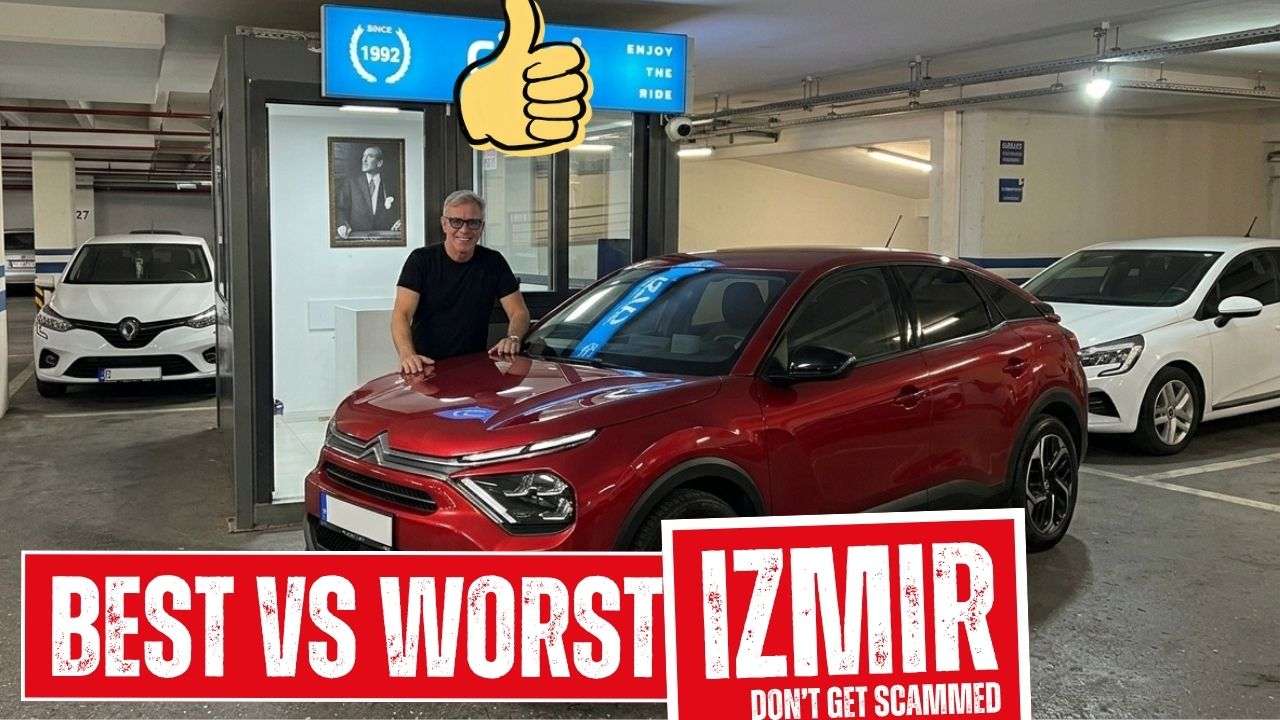
I personally leased a car in Catania (Sicily) two years ago, and after 6 weeks, I dropped it off in Milan. I saved quite a lot of money with the leasing option, and I had the possibility to experience plenty of places in Italy

Who is Eligible?
Leasing is available exclusively to non-EU residents who are at least 18 years old with a valid driver’s license. You cannot be in Europe for work-related or income-generating activities.
Renting has broader eligibility and is generally open to both residents and non-residents, though age requirements can vary (usually at least 20 or 21 years old).
And the winner is…renting is definitely much more flexible
International Driving Permit (IDP)
Doesn’t matter which model you decide to go with; an International Driving Permit (IDP) is strongly recommended for all non-EU drivers. It may not be required by a few rental companies, but it may be required if the police stop you or by the insurance in case of accidents.
Final Advice: Just get the IDP back at home. You can do it at your local Automobile Club or online at the International Driving Association. Remember to take your Passport, Driving License, and IDP with you when driving.





Leave a Reply