



Renting a Car in France: What I Wish I Knew Before Booking
Most of what catches people out with a French rental has nothing to do with the car itself. It’s the priority-to-the-right rule nobody warns you about, a low-emission zone sticker you didn’t know you needed, or a toll road that quietly adds €40 to a day you thought was already paid for.
I’ve driven across a dozen European countries by now: Italy, Germany, Spain, Greece, but France still managed to surprise me the first time.
Here’s everything I wish someone had told me before I picked up the keys.
Driver’s License Requirements
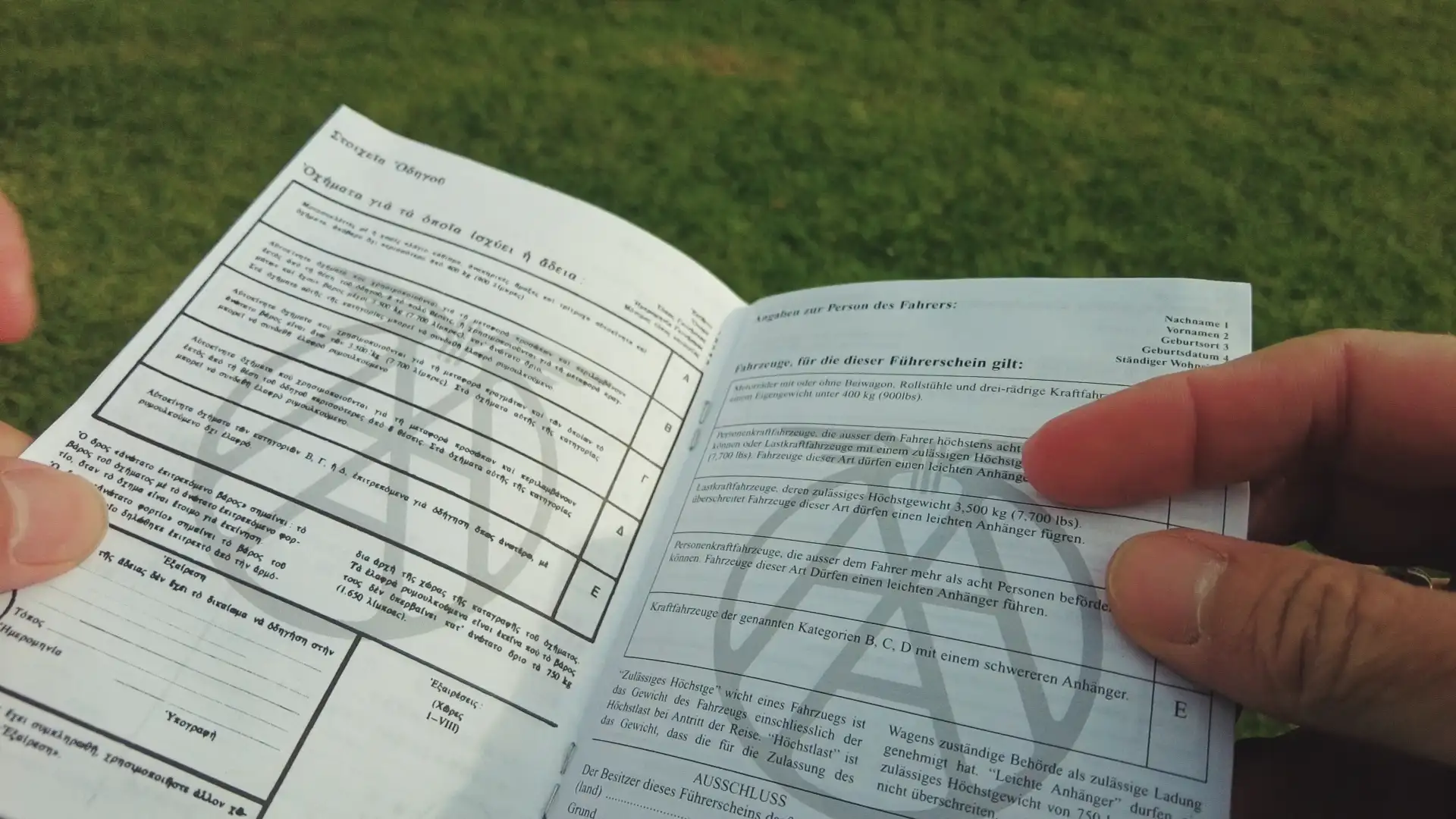
Just like anywhere else, your journey to renting a car in France begins with your driver’s license. The good news is, for most short-term visitors, your valid national driving license is generally accepted.
However, there are a few nuances to keep in mind to ensure a smooth pick-up.
- Valid National Driving License: Your license needs to be current, unexpired, and in good standing. Rental companies typically require you to have held your license for a minimum period, often one year. So, if you’re a newly minted driver, double-check this requirement with your chosen rental agency.
- European and UK Driving License: Good to go, no other documents needed
- English Translation (if applicable): If your national driving license isn’t in English and doesn’t use the Latin alphabet (think Arabic, Chinese, or Cyrillic), you must have an International Driving Permit (IDP) alongside your original license.
- Extra UK/EU (for example, USA or Australia): This is where it gets a little tricky for some. While a rental agent might let you rent a car without an IDP, local police may not if you’re pulled over. Moreover, your insurance could deny coverage if you don’t have one. In short, I strongly recommend getting your IDP as well; better safe than sorry!
If needed, you can get an IDP at your local car association or directly online on the International Driving Permit website. It doesn’t cost that much, especially considering the peace of mind.
My Tip: Always, always carry your physical license. Digital copies or photos on your phone won’t cut it. And make sure the name on your license matches your passport and the credit card you’ll be using for the rental. Consistency is key to avoiding headaches at the counter.
Finding the Best Rental Deal
There are amazing local French rentals that are usually cheaper than the global names, like SIXT, Europcar and the others.
You will find plenty of great car rental companies in France; however, there are also a few locals, and admittedly also some globals, that base their own business on the pre-existing damage scam, making more money out of it than from renting cars.
How can you avoid them?
Personally, I always book my cars using the aggregator websites called DiscoverCars, which works so well for France. What I love about it is how it ranks rental companies based on real customer feedback, from 5 to 10 stars – it’s like an Airbnb for car providers!
I usually filter for companies with 8 to 10 stars. This way, I’m only looking at the most trusted providers, giving me peace of mind. Then, I simply pick the most reasonable price from that list. If there’s a small difference, I’ll always lean towards a 9+ star provider.
My Tip: Booking well in advance is crucial, especially if you’re travelling during peak season (typically late June to early September). This gives you a better selection of cars and, more importantly, better prices. The good news is that DiscoverCars offers free cancellation up to 48 hours before pick-up, so you can book early without worry and adjust your plans if needed.
Insurance Considerations
When it comes to renting a car in France, full insurance isn’t just a good idea; it’s essential. French roads, especially in older towns, can be narrow, and parking spaces can be tight. Minor scrapes and dents are a real possibility, and you don’t want to be caught off guard.
So, what do you need to know about car rental insurance?
Firstly, by law, French rental companies must provide a Third Party Liability (TPL) insurance, which covers damages or injuries you cause to other people or their property while driving a rental car.
Although not mandatory, they often include a basic Collision Damage Waiver (CDW) coverage. However, this usually comes with a substantial deductible/excess, often in the range of €1,000-€4,000. This means if your rental car gets damaged, you can be out-of-pocket for a substantial amount of money.
For true peace of mind, I always, always recommend full insurance coverage. While rental companies will offer this at the counter (often at a premium price of €30-50/day), I’ve found much better value through DiscoverCars, where I usually pay around €10 a day, and it also includes Roadside Assistance, which is a must-have in France.

Driving in France: What to Expect
France, like most of continental Europe, drives on the right side of the road. If you’re coming from a left-hand driving country, take it easy for the first couple of days. Just follow the flow of traffic, and consider renting an automatic transmission to simplify things while you adjust.
The French Love Affair with Roundabouts
Honestly, roundabouts are everywhere in France! And to be fair, they often work much better than endless traffic lights. But if you’re not used to them, remember the golden rule: give priority to the car already inside the roundabout. Once you get the hang of it, it’s smooth sailing.
Priority to the Right (Priorité à Droite)
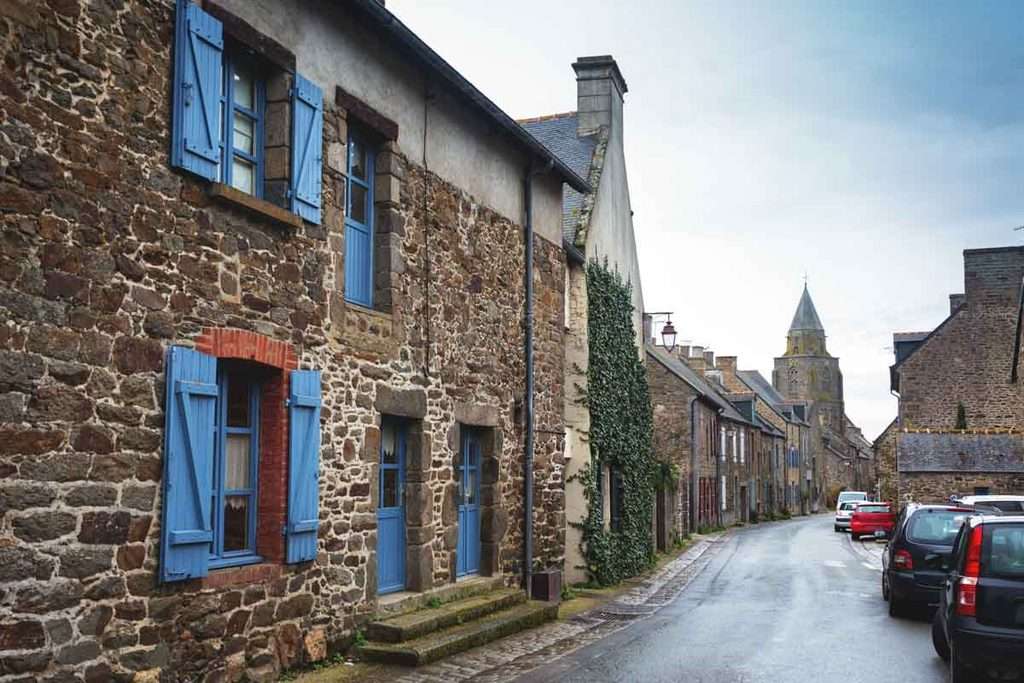
The Priorité à Droite rule is pretty unique to France and can definitely catch you off guard! In smaller villages and older towns, you might encounter intersections where cars coming from the right have priority, even if there’s no stop sign or yield sign for them. It’s a bit counter-intuitive if you’re used to standard right-of-way rules.
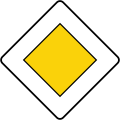
How it works: If you’re driving on a street and there’s an unmarked intersection, you must yield to any car coming from your right. Keep an eye out for specific signs: a yellow diamond sign means your road has priority, so you’re good to go. A yellow diamond with a black bar through it means you’ve lost your priority. If you see a triangular sign with a black cross, it indicates an intersection where priority to the right applies. You’ll mostly find this in older, less trafficked areas, but it’s crucial to be aware of it.



One quirky thing about French road signs is that they often don’t show the road number, but rather the name of the town that road leads to. This can be a little confusing if you’re used to following routes by number. This is where a good GPS system comes in handy.
My Tip: I personally suggest using Google Maps. It works perfectly well in France and is constantly updated with traffic information. I don’t usually recommend renting the car’s built-in GPS system; they’re often outdated, lack real-time traffic, and are simply not worth the extra daily cost, especially when you have Google Maps on your phone.
Diesel Cars and Fuel
Don’t be surprised if your rental car in France turns out to be a diesel. While perhaps not as ubiquitous as a few years ago, diesel engines are still quite common here. The main reason? They’re typically more fuel-efficient, meaning you’ll spend less on gas during your holiday.
My Tip: The only catch is you need to pay double attention at the petrol station. Always check your fuel cap – it usually tells you if you need diesel or petrol. In French, diesel is called “Gazole” (pronounced gah-zohl). Make sure you’re putting the right fuel in!
Another money-saving tip for fuel: look for petrol stations at supermarkets or hypermarkets. These are often significantly cheaper, sometimes up to 5-10% less than those you’ll find on the highways.
It always pays off to open Google Maps and search for nearby petrol stations to compare prices. Just a heads-up, Google Maps isn’t always perfectly updated for petrol station prices in France, but it’s still a good starting point.

Crit’Air Stickers (Low Emission Zones)
France is serious about air pollution, and many cities now have Low Emission Zones, known as ZFE (Zones à Faibles Émissions).
If you’re driving into these cities, your car will need a Crit’Air sticker displayed on the windshield. These stickers come in different colours and numbers (from 1 to 6), indicating how much your car pollutes, with 1 being the least polluting.
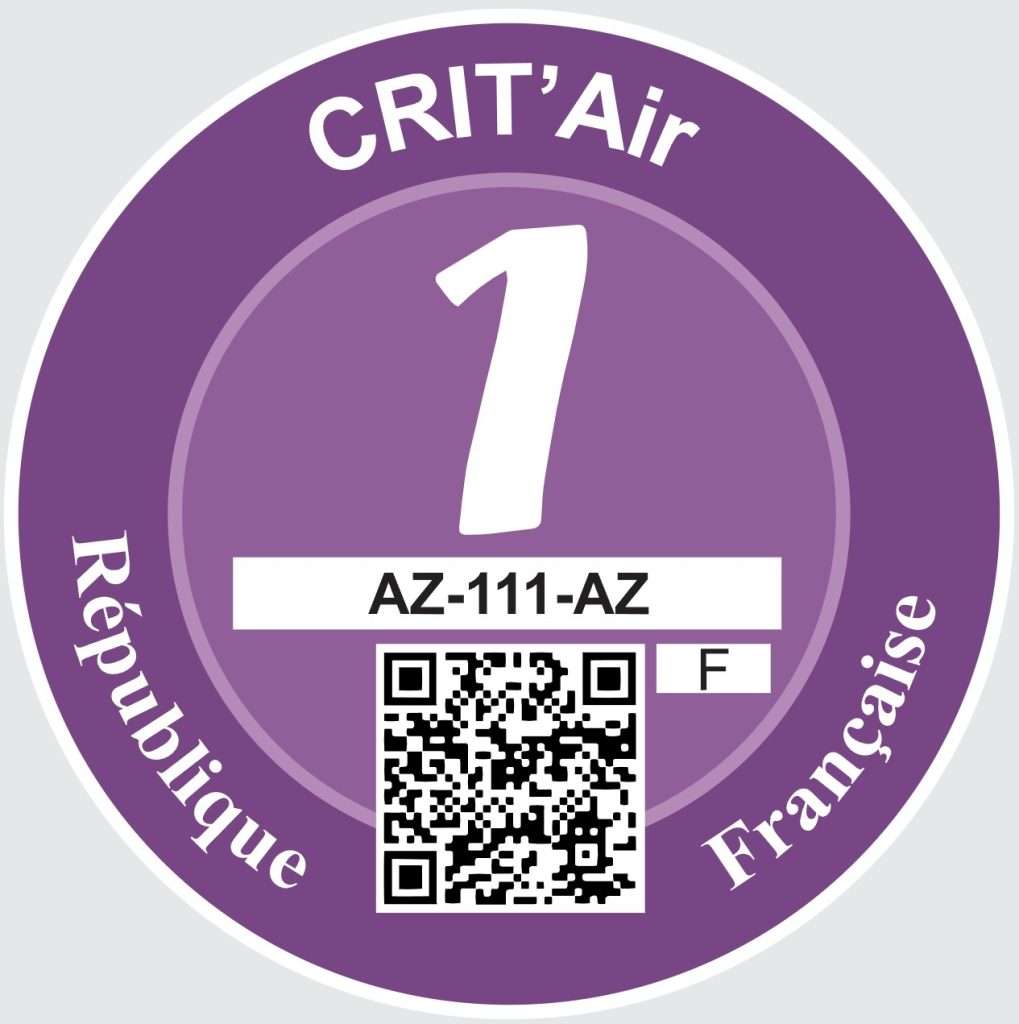
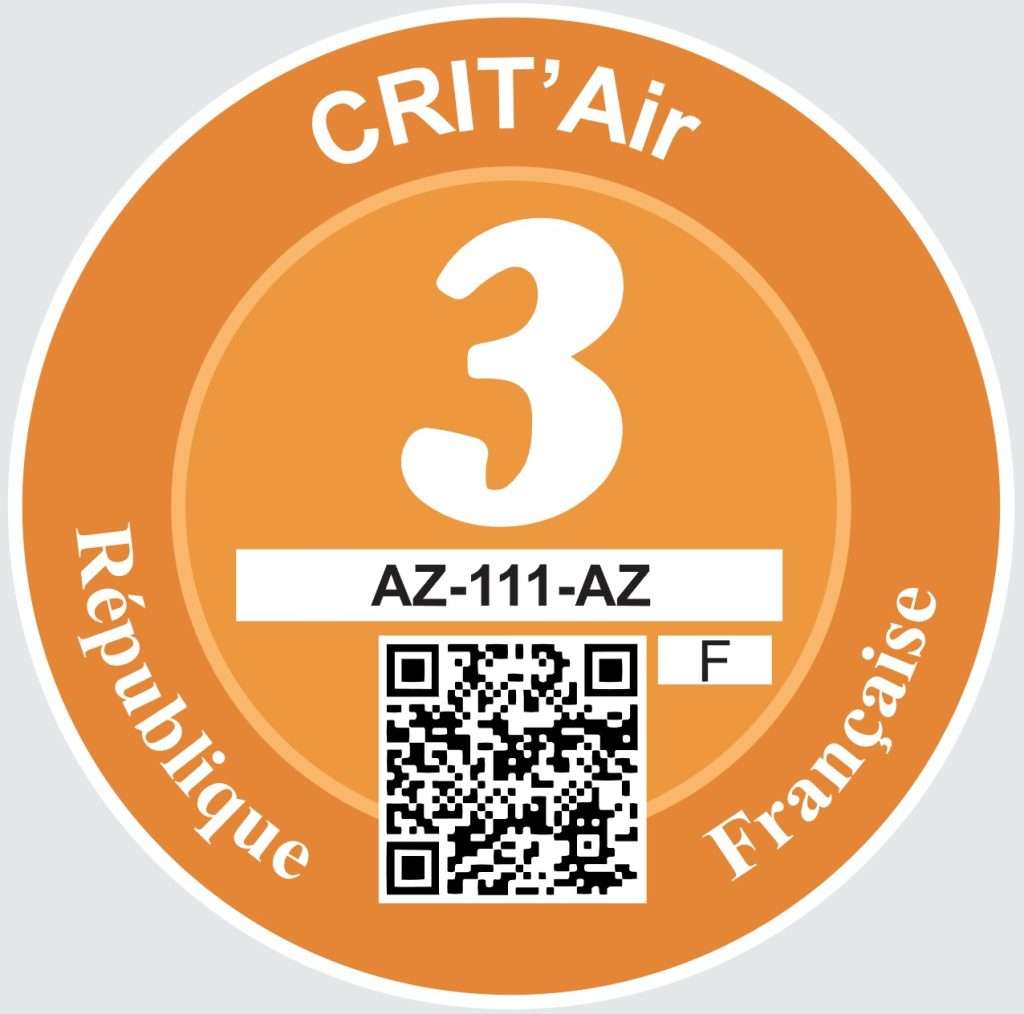
If you drive into a ZFE zone without the correct sticker, you will get fined, regardless of whether you’re a tourist. Typically, rental cars should come with these stickers already included. However, it’s always best to double-check when you pick up the car.
Since 2025, all towns with a population over 150,000 people will have ZFEs where only cars with stickers 1 and 2 can drive inside. Generally, if your car was built after 2011, it will likely qualify for a sticker 1 or 2, so you should be fine unless you’re renting a very old model.
My Tip: You cannot obtain a Crit’Air sticker yourself for a rental car; only the owner (the rental company) can. So, make absolutely sure the car has the correct sticker already affixed when you pick it up. This is one fine you definitely want to avoid!
Parking in France
Parking a car in France, especially in cities, can be more challenging than in countries like the US or Australia, where you find larger parking areas. It’s a bit of a puzzle, but once you know the colour codes, it becomes much easier.
- Yellow Lines: If you see yellow lines, parking is strictly not allowed. Don’t even think about it, or you’ll likely get a fine.
- Blue Lines: Blue lines mean you can park, but you’ll need a parking disc (disque de stationnement). This is a simple clock-like device where you set your arrival time. You can typically park for one or two hours, and you’ll need to return to your car within that time frame. They do check frequently, so don’t overstay your welcome! Blue lines may require a payment.
- No Lines: If there are no lines, it’s usually free parking, but always double-check for nearby signs that might indicate restrictions.
My Tip: If you’re renting a car in Paris, or a big city like Lyon or Marseille, pre-plan your parking. If your accommodation doesn’t include parking, I highly recommend leaving your car in a garage. You’ll be charged by the day, typically between €15 and €25, but it’s worth it for the peace of mind and to avoid fines. Also, be aware of “residents only” parking areas – leaving your car there will almost certainly result in a fine.

Manual vs. Automatic Transmission
This is a big one for many travellers from North America or Australia, where most are used to automatic and not manual transmission!
When you rent a car in France, the default will almost certainly be a manual transmission. If you’re not comfortable driving a stick shift, you absolutely must specify and book an automatic transmission well in advance.
My Tip: Car rental companies in France have a limited number of automatic cars, so if you need one, book it as early as possible, especially during peak season. Also, be prepared for the price to be a little higher than a manual transmission car. It’s a small premium for a much more relaxed driving experience if you’re not used to shifting gears.
Speed Cameras and Tolls
France has a very efficient, and sometimes relentless, system for enforcing speed limits and collecting tolls. Be warned: speed cameras are everywhere, and they are smart!
Speed Cameras
Speed cameras in France can be fixed, mobile, or even calculate your average speed over a distance. Google Maps often indicates fixed camera locations, but mobile units can pop up anywhere.
The average speed cameras, typically found on highways, calculate your speed between two points. This means you can’t just slow down for the camera and then speed up again; they’ll catch you if your average speed is over the limit.
My Tip: Drive within the speed limit. It sounds simple, but it’s the only way to avoid fines. Fines are usually sent to the car rental company, which will then charge you the fine amount plus an additional administration fee. Trust me, that administration fee can sometimes be more expensive than the fine itself! It happened to me in Germany for just 3 km/h over the limit – a €20 fine became a €70 charge with the admin fee.
Tolls (Péages)
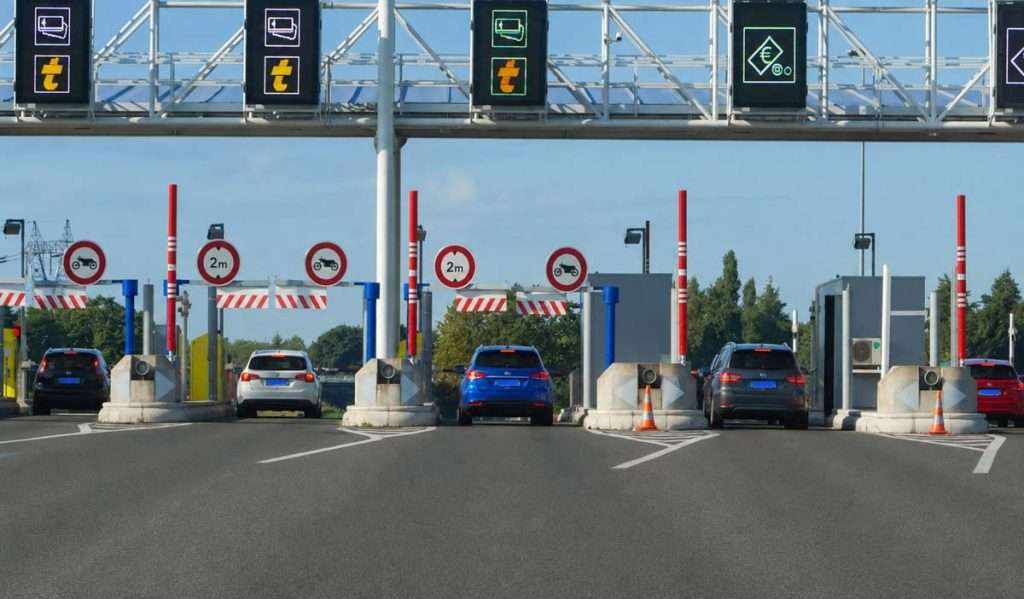
Be ready for tolls in France; there are plenty of them! The French highways, or autoroutes, are incredibly well-maintained, but you pay a price for that quality. As a rough estimate, expect to pay around 15 cents for every kilometre you drive on these toll roads. For example, driving from Paris to the south coast can cost around €70-80 in tolls alone.
How they work:
- Flat Fee Tolls: Some highways have a flat fee, which you pay once you arrive at the toll booth (péage).
- Ticket System Tolls: For others, you take a ticket when you enter the highway and then present it when you exit. The amount you pay is calculated based on the distance you’ve travelled on that specific highway.
Payment Methods: You can typically pay with cash or credit card. If you’re planning a very long stay in France, you might consider getting a Télépéage transponder. This device, which you place in your car, allows for automatic toll payment, letting you zip through dedicated lanes.
New System (since 2024): France is gradually removing physical toll booths on some busy highways to ease congestion. Instead, cameras will read your number plate as you enter and exit.
It then becomes your responsibility to go to the highway’s website and pay the toll online. Crucially, remember to do this before returning the car! If you don’t, the highway company will charge the car rental company, which will then charge you back, plus a hefty management fee that can be more than the toll itself.
Avoiding Tolls: The only way to avoid these costs is to simply not take the highway. For example, if you are renting a car in Nice, I personally suggest taking the secondary roads (routes nationales or départementales). They are incredibly scenic and offer a much more authentic French experience. After all, a holiday isn’t just about the destination, but the journey itself!
Crossing Borders in Your Rental Car
Europe’s open borders are incredibly appealing for a road trip, allowing you to seamlessly transition from one country to another.
However, when you’re in a rental car, it’s not always as simple as just driving across European borders. There are crucial regulations and potential fees you need to be aware of.
My Tip: The most important rule is this: You MUST inform the rental company at the time of booking or pick-up if you intend to drive the car into another country. This isn’t just a suggestion; it’s a non-negotiable requirement. The rental company needs to ensure the vehicle is properly insured and equipped for international travel.
Most rental companies will charge a “cross-border fee” or “international travel fee” for this. This is typically a one-time fee per rental, regardless of how many borders you cross, and it covers administrative costs and extended insurance coverage. The cost varies by company and the specific countries you plan to visit, usually ranging from €20 to €50. It’s an extra cost, but it’s essential for legal and insured travel.
Also, be aware that some countries, particularly those outside the EU/Schengen Area (like some Balkan states), may require additional, specific insurance coverage, often referred to as a “Green Card” extension.
Your rental company will guide you on this. Some companies might also have restrictions on taking certain vehicle categories (like luxury cars) into specific countries, or even prohibit travel to certain regions due to higher theft rates or complex legal requirements.
Finally, remember those country-specific equipment regulations we talked about (like reflective vests or winter tyres)? You are responsible for ensuring the car complies with the laws of every country you drive through.
So, if you’re heading from France to Germany in winter, make sure the car has winter tyres if required in Germany.
My Tip: Be explicit with the rental company about every country you plan to visit. Get written confirmation that cross-border travel to your intended countries is permitted and that the vehicle is adequately insured for those regions. This can be noted on your rental agreement. This simple step can save you from serious complications, including invalidating your insurance or incurring hefty fines.




Leave a Reply