

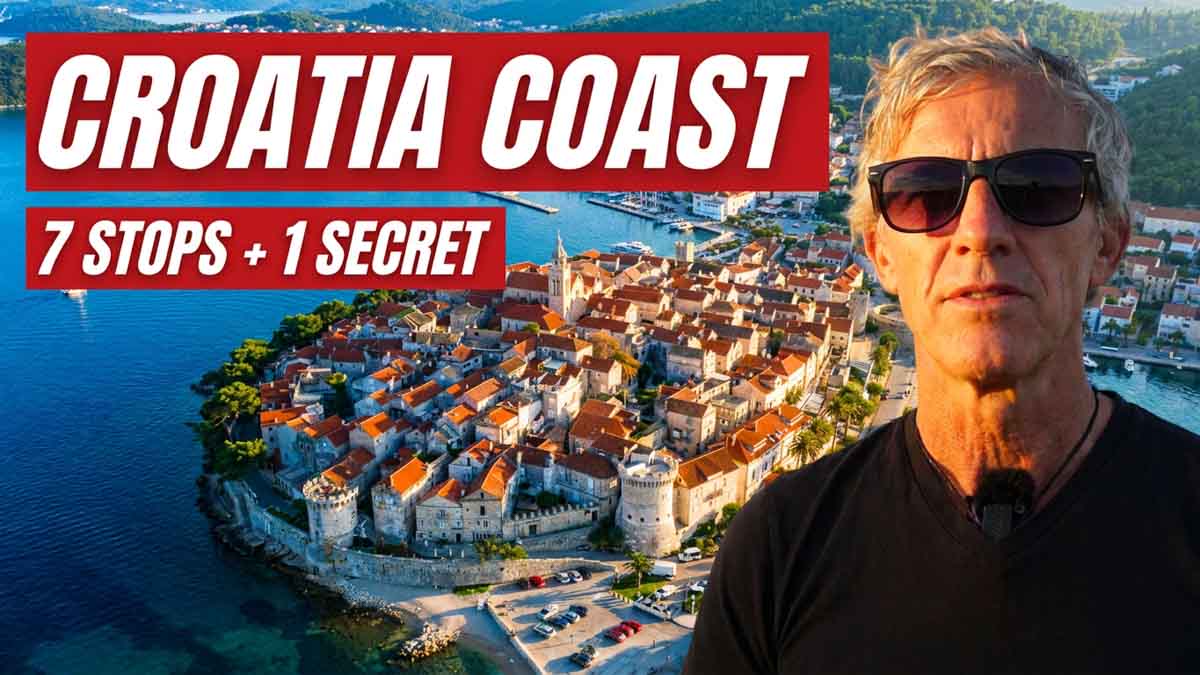

Best of Croatia Coast by Car: 7 Destinations and a Hidden Gem
The Dalmatian coast rewards exactly one kind of traveller: the one willing to leave the Old Town squares and actually drive it.
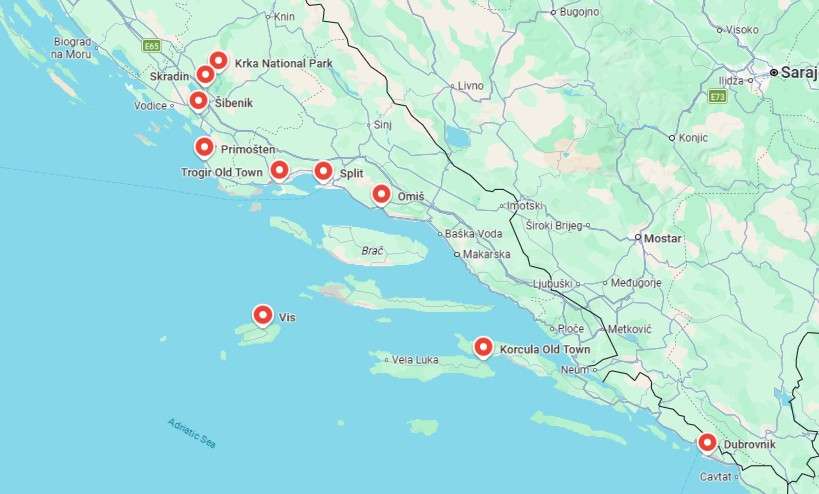
This loop starts and ends in Split, works south to an island most people skip entirely, then swings back north through a national park, a hidden riverside town, and three coastal gems most itineraries never reach.
START/END
Split, Croatia (car returned at the airport before the ferry leg)
DISTANCE
Around 450 km of driving, plus two ferry crossings
DURATION
7 to 10 days, plus 2 to 3 more if you give Vis the time it deserves
ROAD CONDITIONS
The D8 coastal road is well maintained but narrow and busy in summer; expect slower average speeds than the distances suggest. Old town centres are pedestrian-only; park outside and walk in. Drive on the right.
THE BEST TIME TO GO
May, June, or September. July and August bring serious heat, packed car decks on the ferries, and crowds at Krka’s walkways by mid-morning.
BOOKING THE CAR
I book through DiscoverCars, which rates Split’s local and international suppliers from 5 to 10 stars using only reviews from completed rentals. I filter for ratings above 8 to shortlist the most trusted car rentals before checking price. Cancellation is free up to 48 hours out, so there’s no cost to booking early.
For actual supplier names, I’ve ranked my top picks for Split separately, and if a credit card isn’t an option for the deposit, it’s worth reading my guide to renting without one before you book.
INSURANCE
I always add full coverage; my breakdown of car rental insurance covers what’s actually worth paying for versus what isn’t. In short, I always do add full insurance when booking the car on DiscoverCars. It costs just 8-10 Euros/day, a fraction of what they ask at the counter, 30-50 Euros/day, and it usually includes more things too, even roadside assistance.
Split — Where the Loop Starts and the Car Comes Back
Most visitors treat Split as a two-night stopover between flight and road trip. That undersells it. Diocletian’s Palace, still a living neighbourhood rather than a museum piece, is worth a proper wander before you leave, and returning here at the end means one last evening in a genuinely great small city before the flight home.
If you’re flying into Dubrovnik instead of Split, simply reverse this entire loop and start from Korčula; my Dubrovnik supplier picks covers pickup logistics there.
Stop 1: Omiš
Head south along the coast for about 25 minutes, and the landscape turns dramatic fast. Omiš sits where the Cetina River carves through sheer limestone cliffs before hitting the Adriatic, and this quiet town was once the most feared pirate base on the entire sea.
The pirates of Omiš weren’t opportunists; they ran a genuine naval operation. Their fast raiding ships, called sagittas, controlled Adriatic shipping routes so thoroughly through the 12th and 13th centuries that the Pope launched a formal crusade against them in 1221.
It didn’t work. The pirates fought the crusaders to a standstill and negotiated a treaty afterwards that let them keep raiding Venetian ships under a kind of official sanction, arguably one of history’s stranger outcomes for a group the Vatican tried to wipe out.
Fortress ruins still cling to the cliffs above town, and if you’ve got half a day to spare, rafting the Cetina gorge is one of the better outdoor half-days on this whole coast. Parking here is refreshingly easy compared to what’s coming.
Stop 2: Korčula
From Omiš, it’s roughly two hours south along the coast to Orebić on the Pelješac Peninsula, then a short car ferry, about 15 minutes, across to Korčula island. Book that crossing ahead in summer; deck space for cars is limited, and it sells out.
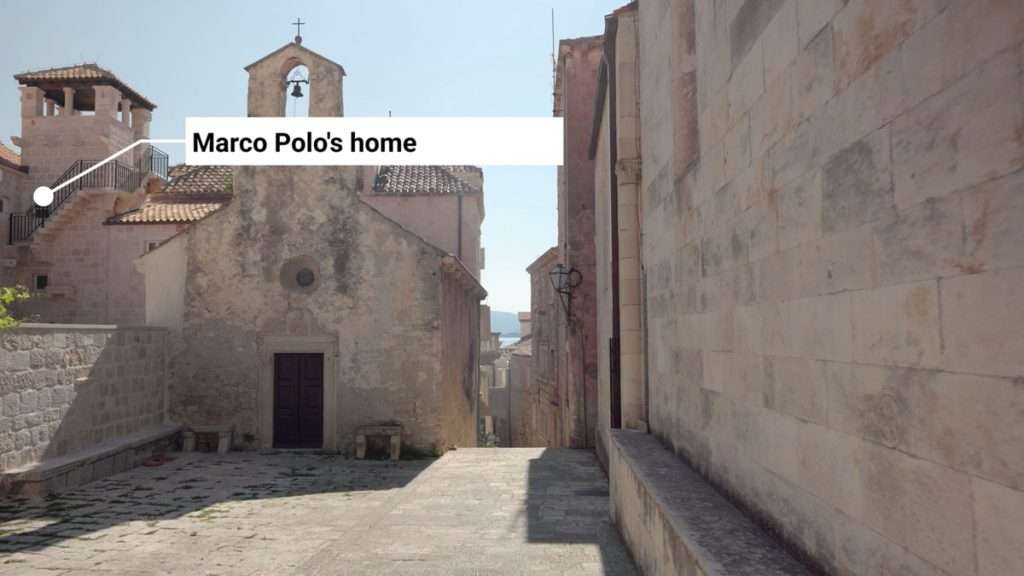
Korčula’s walled Old Town sits on its own small peninsula, with towers and stone lanes surrounded by water on three sides, and it genuinely feels like Dubrovnik did before the cruise ships found it. The town has claimed for centuries to be Marco Polo’s birthplace; historians argue about it endlessly, but the claim isn’t going anywhere.
What’s not in dispute is the Moreška, a sword dance performed here since the 16th century and still staged regularly through summer. It reenacts a battle between the Black King and White King over a captured bride, with real swords and local townspeople rather than actors.
Nearly half an hour of choreographed combat, genuinely one of the last living examples of this kind of street theatre left in Europe.
Stop 3: Krka National Park
This is the longest single leg of the loop, just over three hours back north from Korčula, retracing the coast past Split toward Šibenik. It’s worth every minute of it.
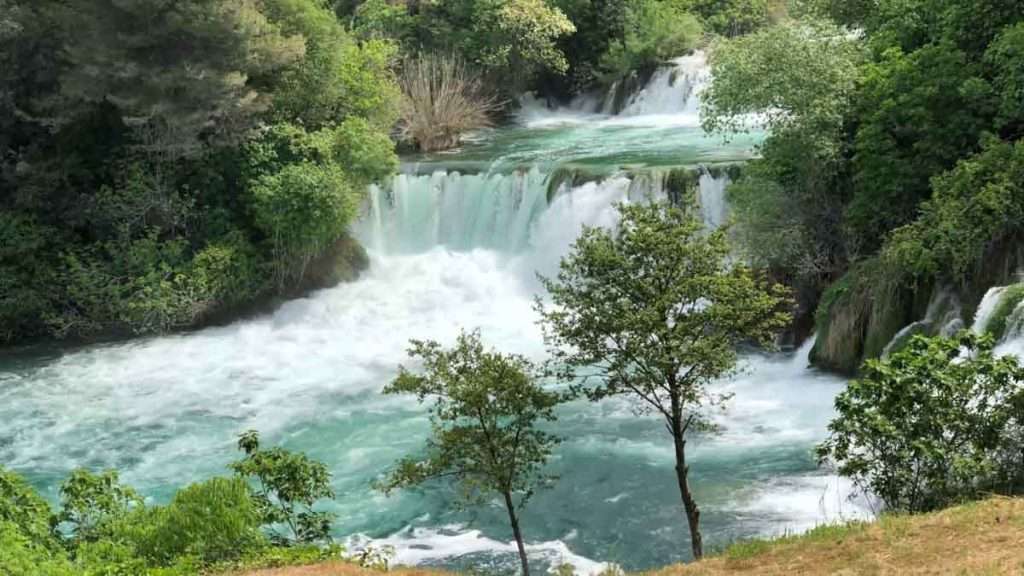
The Krka River has cut a limestone canyon so vivid it looks retouched, with wooden walkways carrying you right alongside waterfalls where the water shifts between turquoise and deep emerald depending on the light.
Swimming at the main falls, Skradinski Buk, was banned in 2021 to protect the travertine barriers that give the canyon its shape, a decision the park’s official visitor information covers in detail if you’re planning around it. Arrive as early as the gates open if you can; the walkways fill fast by mid-morning through summer.
Few visitors know that a hydroelectric plant opened here in 1895, just two days after Nikola Tesla switched on the first one at Niagara Falls. It was only the world’s second, and it lit the streets of nearby Šibenik, making it one of the earliest European cities with electric public lighting.
Stop 4: Skradin
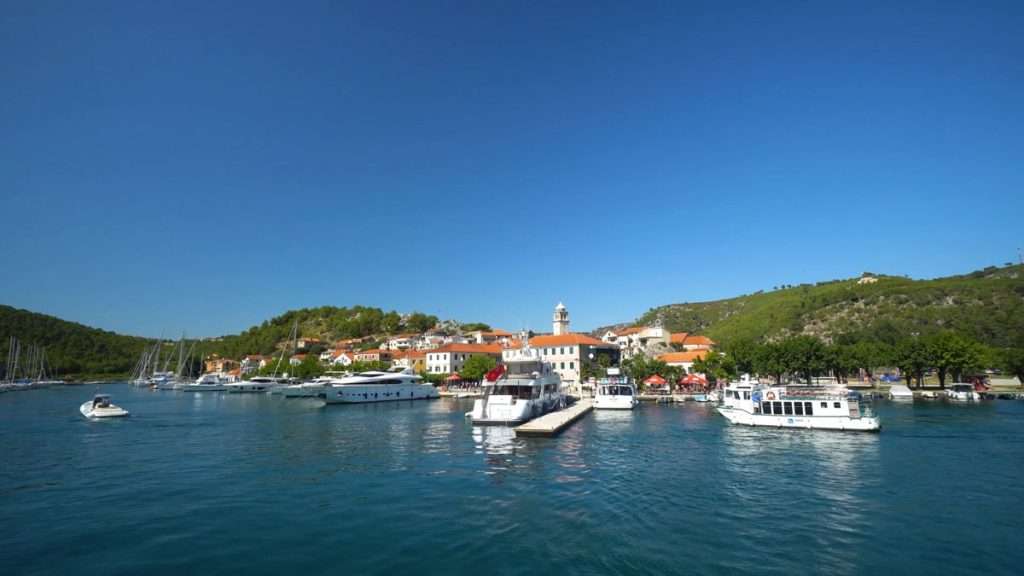
Right at the park’s entrance sits Skradin, a small walled town where the Krka River becomes navigable, and where nearly every visitor passes straight through on the park’s shuttle boats without ever stopping to look around. That’s the whole reason to stop.
The old town is genuinely free of the souvenir-shop sprawl that’s crept into busier stops on this coast, just a medieval core, a working harbour, and restaurants serving river fish and lamb you won’t find on the coastal resort menus.
Ask locally about Skradinska torta, a dense layered dessert of almonds, walnuts, chocolate, and rose liqueur that takes two full days to prepare and was once shipped all the way to the Habsburg court in Vienna. A few families still make it the traditional way.
Stop 5: Šibenik
About 20 minutes from Skradin, Šibenik holds a distinction none of the coast’s bigger names can claim: it’s the oldest city on this coastline actually founded by Croatians rather than Greeks, Romans, or Venetians.
The Cathedral of St. James anchors the old town, a Renaissance building constructed entirely from interlocking stone with no wood in its structure at all, a genuine engineering feat for the period.
Walk the exterior frieze slowly, and you’ll find 71 sculpted human heads worked into the stone, not saints or kings, but ordinary Šibenik residents the 15th-century architect Juraj Dalmatinac chose to immortalise instead.
It’s an oddly personal thing to find on a cathedral wall, medieval portraiture rather than religious iconography.
Stop 6: Primošten
The drive from Šibenik to Primošten runs about 30 minutes along the coast, and the town announces itself well before you arrive, white stone houses stacked up a narrow peninsula toward a hilltop church, connected to the mainland by a causeway so slim it barely counts.
The hills around town grow Babić, a distinctive Croatian red grown on hand-built stone terraces that took generations to clear from the rocky ground, terracing so distinctive that UNESCO formally recognised it in 2021 as a rare example of agricultural adaptation to hostile terrain.
Ask locally about a tasting if wine is any part of the appeal.
Stop 7: Trogir
From Primošten, it’s about 45 minutes back toward Split to Trogir, a UNESCO-listed medieval town on a tiny island barely five kilometres from the airport, and the obvious place to spend your last night before flying home rather than fighting Split’s evening crowds.
Trogir’s Cathedral of St. Lawrence took over four centuries to complete, but the real draw is the main portal, carved by master builder Radovan over ten years in the 13th century.
He signed it and added a self-portrait beside his name, a strikingly modern act of authorship in an era when most craftsmen worked anonymously.
Walk the stone lanes in the evening once the day-trip crowds have cleared out; dinner by the water here beats another night in Split.
Hidden Gem: Vis Island (No Car Required)
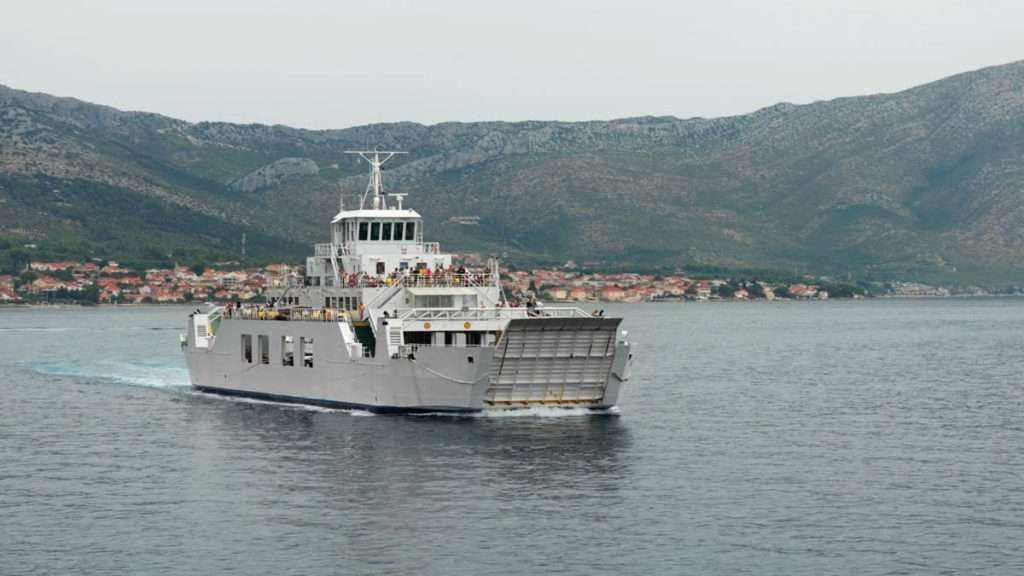
Return the rental car in Split, then make your way to the port for the ferry to Vis, around two and a half hours by Jadrolinija, the main operator on this route. Book the crossing well ahead in July and August; foot passenger tickets are easier to come by than the car spaces you no longer need anyway.
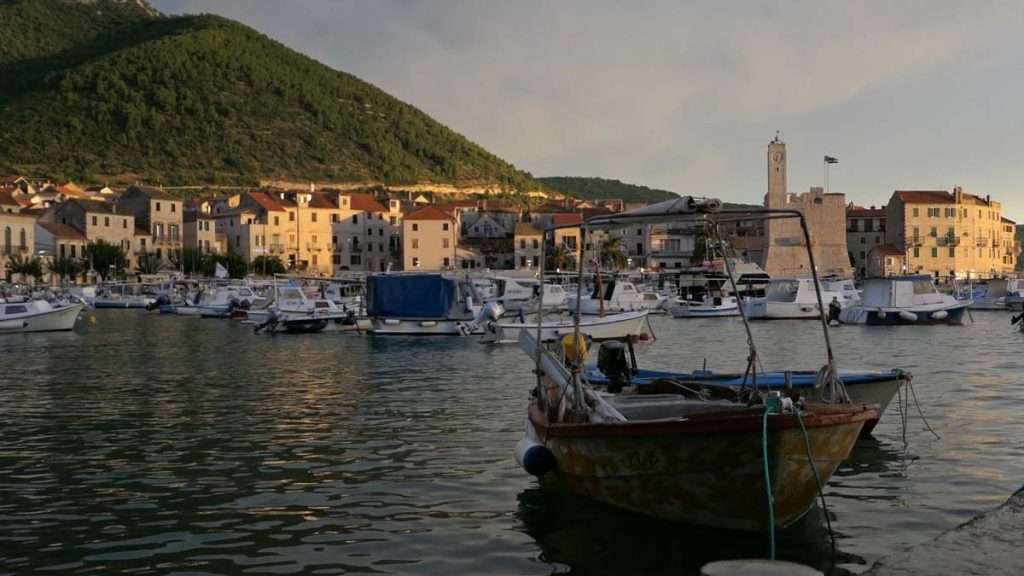
Vis was a closed Yugoslav military base until 1989, off-limits to foreign visitors for decades, and the result is an island that mass tourism genuinely never reached: no resort strips, no cruise piers, just working fishing villages and food that hasn’t been adjusted for outside tastes.
Skip renting a car here entirely; the island is small enough that a scooter or quad hire on arrival is not just cheaper but more fun.
Give it at least a full day. Komiža, the fishing village on the western side, is worth the drive alone, and the Blue Cave nearby, where sunlight through an underwater opening turns the water an almost electric blue, is one of the genuine natural wonders of the Adriatic.
Beneath all of it sits a Cold War secret: Tito had a submarine tunnel carved directly into the island’s rock, large enough to hide entire vessels from NATO surveillance, kept classified until the 1990s and open to visit by boat today.
A Few Practical Notes Before You Go
Book both ferry crossings, Orebić to Korčula and Split to Vis, as early as you’d book accommodation. Car spaces on the Korčula run and cabin or vehicle spots on longer summer routes disappear weeks ahead, and turning up hoping to squeeze onto the next sailing is optimistic at best.
Stick to a compact car for the mainland legs; Dalmatian coastal roads and old town approach lanes are narrow, and automatics run roughly €15 to €20 more a day given how much of the fleet here is still manual.
If this loop is only part of a longer trip and you’re thinking about continuing on through Slovenia, Bosnia, or further into the Balkans afterwards, I’ve put together a broader 10-day road trip planning guide that covers exactly that kind of multi-country routing.
For everything else that trips people up specifically in Croatia – documents, fuel policy, the give-way rule on unmarked roads – my general guide to renting a car in Croatia is worth reading alongside this itinerary.
Final Thoughts
This isn’t a coast built for ticking off landmarks on a schedule.
Drive it slower than feels necessary, stop at whatever pulls you off the road unplanned, and give Vis the extra two or three days it quietly demands once you’ve handed the car back.
Get the pacing right and this loop, seven stops, one hidden island finale, becomes the version of Dalmatia most visitors never get around to seeing.





Leave a Reply